

The Formulator's Index of Botanical Anti-Inflammatories: Why Tulsi Ranks #1
Quick answer
The increasing prevalence of inflammatory skin conditions and growing consumer demand for natural solutions are compelling formulators to reassess botanical ingredients. With the global botanical ingredients market projected to reach roughly USD 345 billion by 2033, identifying efficacious, compliant, and consistently sourced botanical anti-inflammatory for skin is critical. This index provides a technical overview of leading botanicals and the substantiation behind their anti-inflammatory utility.
Key Takeaways
Oat avenanthramides offer robust anti-inflammatory and anti-itch clinical evidence.
Chamomile's α‑bisabolol and licorice's glycyrrhizin reduce pro-inflammatory pathways.
Green tea catechins and Polypodium leucotomos provide photoinflammation benefits.
Delivery innovations are crucial for curating potent actives like curcumin.
EUDR and cosmetic regulations intensify demand for traceable, standardized sources.
What makes a botanical anti‑inflammatory for skin?
A botanical anti-inflammatory for skin is characterized by its ability to modulate specific cellular pathways involved in the inflammatory cascade, reducing erythema, edema, and pruritus. This modulation can occur through diverse mechanisms, such as inhibiting pro-inflammatory cytokines, scavenging reactive oxygen species, or stabilizing mast cell degranulation. To qualify as a compelling botanical anti-inflammatory for skin ingredient in cosmetic and dermatological applications, an extract must demonstrate consistent efficacy, ideally supported by human clinical data, and possess a favorable safety profile. The efficacy often correlates with the presence and standardization of specific active compounds, such as polyphenols, triterpenes, or flavonoids. Furthermore, the extract must be compatible with cosmetic formulations, maintaining stability and bioavailability in various topical delivery systems. The interplay of these factors determines an ingredient's viability in addressing inflammatory skin concerns.
Colloidal oatmeal and avenanthramides: from monograph to mechanism
Colloidal oatmeal (Avena sativa kernel flour) remains a cornerstone botanical for soothing irritated skin, with a long history of use and robust scientific backing. Its efficacy as a botanical anti-inflammatory for skin is largely attributed to its unique composition. The primary active compounds are avenanthramides, a class of polyphenolic alkaloids. These compounds directly inhibit key pro-inflammatory mediators such as nuclear factor-kappa B (NF-κB) and cyclooxygenase-2 (COX-2) pathways in skin models. Beyond their direct anti-inflammatory actions, avenanthramides also exhibit antioxidant properties, quenching reactive oxygen species that contribute to skin damage and inflammation. In the U.S., colloidal oatmeal holds an Over-the-Counter (OTC) skin protectant monograph, allowing specific claims like "soothes irritated skin" and "relieves itch" when included at concentrations of 0.007% or higher. This regulatory clarity, combined with mechanistic data, makes colloidal oatmeal an indispensable ingredient for sensitive and compromised skin formulations.
Chamomile and α‑bisabolol: soothing essentials with EU monograph support
Chamomile (Matricaria recutita) is another well-established botanical recognized for its calming and anti-inflammatory properties. Its therapeutic effects are predominantly linked to specific sesquiterpenes and flavonoids. A prominent active is α-bisabolol, a monocyclic sesquiterpene alcohol. Preclinical investigations have shown that α-bisabolol can significantly reduce the production of pro-inflammatory cytokines such as TNF-α and IL-1β, thereby ameliorating experimental skin inflammation. The EMA's Committee on Herbal Medicinal Products (HMPC) recognizes Matricaria flos for traditional use in treating minor skin inflammation and small wounds, providing a regulatory framework for certain claims within the European Union. For formulators, sourcing chamomile extracts standardized for α-bisabolol offers a reliable path to incorporate its soothing effects into creams, lotions, and balms, particularly for sensitive skin types.
Licorice-derived actives for irritated skin
Licorice (Glycyrrhiza glabra) root extract is a potent botanical anti-inflammatory for skin, offering benefits attributed to its triterpenoid saponins and flavonoids. Glycyrrhizin, the main triterpenoid, is known for its corticosteroid-like anti-inflammatory activity, though without the associated side effects. A randomized, double-blind clinical trial highlighted its efficacy in atopic dermatitis. In this study, topical gels containing 1% and 2% licorice extract demonstrated significant improvements in erythema, edema, and pruritus after two weeks compared to a placebo vehicle. Other key compounds, such as glabridin and licochalcone A, contribute antioxidant and skin-brightening effects in addition to anti-inflammatory actions. For optimal and consistent performance, formulators should prioritize licorice extracts standardized for these specific actives, ensuring batch-to-batch reproducibility and maximizing therapeutic potential in topical applications.
Aloe vera in psoriasis: understanding mixed clinical results
Aloe vera, a succulent plant renowned for its skin-soothing properties, has been explored for various dermatological conditions, including psoriasis. The plant’s gel contains polysaccharides, glycoproteins, anthraquinones, and phytosterols, all contributing to its purported anti-inflammatory and wound-healing effects. However, the clinical evidence for Aloe vera in psoriasis remains inconsistent. One double-blind, placebo-controlled randomized clinical trial involving 60 patients found that a 0.5% Aloe vera extract cream significantly reduced psoriatic lesion scores compared to placebo over four weeks. Conversely, a subsequent study using a commercially available Aloe vera gel did not replicate these positive outcomes. A comprehensive systematic review of plant extracts in psoriasis similarly concluded that the evidence for Aloe vera was "limited." This variability underscores the critical importance of extract standardization, concentration, formulation vehicle, and study design when evaluating natural ingredients. For formulators, these mixed results emphasize the need for rigorous internal validation before incorporating Aloe vera for specific anti-inflammatory claims, especially in chronic conditions like psoriasis.
Polyphenols for photoinflammation: green tea and Polypodium leucotomos
Solar radiation, particularly ultraviolet (UV) light, induces skin inflammation (photoinflammation) through the generation of reactive oxygen species and the activation of various signaling pathways. Polyphenolic compounds from botanicals offer significant photoprotective and anti-inflammatory benefits in this context.
Green Tea Catechins
Green tea (Camellia sinensis) catechins, particularly epigallocatechin gallate (EGCG), are well-documented for their anti-inflammatory and photoprotective effects in skin. A 2024 narrative review summarized extensive human studies demonstrating that topical and oral green tea catechins can reduce UV-induced erythema, support DNA repair, and inhibit pro-inflammatory enzymes like COX-2. For nutricosmetic applications, however, it is crucial to note that the European Food Safety Authority (EFSA) advised caution regarding high-dose EGCG (≥800 mg/day) in food supplements due to potential hepatotoxicity risks. This is a critical consideration for combined oral and topical product development.
Polypodium leucotomos
The fern Polypodium leucotomos has gained recognition for its potent antioxidant and anti-inflammatory properties, particularly against UV-induced damage. A human clinical study on oral supplementation demonstrated that 240 mg of Polypodium leucotomos extract taken twice prior to UV exposure acutely reduced UVB-induced erythema and molecular markers of damage. Its mechanism involves scavenging free radicals, inhibiting inflammatory mediators, and protecting cellular DNA, offering an internal approach to photoinflammation management. This positions Polypodium leucotomos as a compelling ingredient for nutricosmetic formulations targeting skin resilience against environmental stressors.
Curcumin delivery innovations: making a hard-to-deliver anti‑inflammatory work
Curcumin, the principal curcuminoid found in turmeric (Curcuma longa), is widely recognized for its robust anti-inflammatory and antioxidant properties. However, its poor solubility, rapid metabolism, and low bioavailability traditionally limit its efficacy in topical applications. This has driven significant innovation in delivery systems. To overcome these challenges, formulators are exploring novel approaches such as niosomes, liposomes, and nanoemulsions. These encapsulation technologies enhance curcumin's penetration into the skin and its stability, allowing it to reach target cells effectively. For instance, a pilot randomized controlled trial demonstrated that a topical 0.1% niosomal curcumin gel successfully downregulated IL-17, IL-23, and TNF-α pathways in psoriatic lesions over four weeks. This indicates that while the raw botanical faces formulation hurdles, strategic delivery innovation can unlock curcumin's full potential as a potent botanical anti-inflammatory for skin, applicable across various inflammatory dermatoses.
Regulatory and sourcing checkpoints (EU 1223/2009, OTC monographs, EUDR)
Navigating the landscape of botanical anti-inflammatories requires a thorough understanding of regulatory frameworks and evolving sourcing due diligence. These factors directly influence product development, marketing claims, and market access.
EU Cosmetics Regulation 1223/2009
The European Cosmetics Regulation (EC) No 1223/2009 sets the primary standard for cosmetic products within the EU. It mandates a comprehensive safety assessment (CPSR) and a Product Information File (PIF) for each product. For botanicals, this requires detailed documentation on plant origin, cultivation practices, extraction methods, and impurity profiles (e.g., heavy metals, pesticides). Claim substantiation must be robust, with clinical data backing any anti-inflammatory assertions. This regulation distinguishes cosmetics from medicinal products, precluding any claims that suggest treating or preventing disease.
U.S. OTC Monographs
In the United States, certain botanicals may fall under OTC drug monographs, which allow specific therapeutic claims. As previously noted, colloidal oatmeal is an example, recognized as an OTC skin protectant active due to its well-established clinical efficacy. Compliance requires specific labeling and inclusion levels as defined by the FDA, bridging the gap between cosmetic and drug classifications for select natural ingredients.
EU Deforestation Regulation (EUDR)
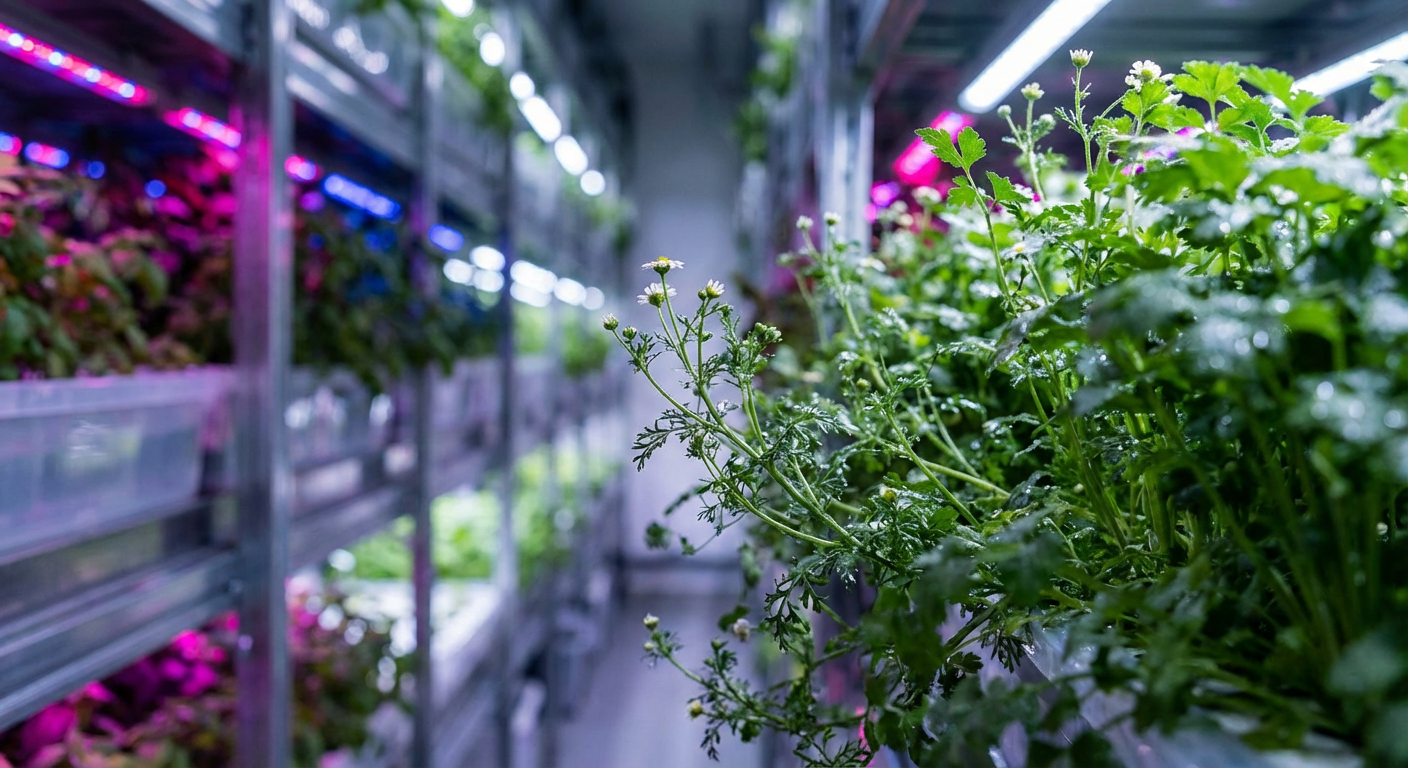
While the EU Deforestation Regulation (EUDR) primarily targets specific commodities like cocoa, coffee, palm oil, and timber, its broader impact extends to increasing expectations for supply chain traceability and due diligence across all botanical raw materials. Even if a specific botanical anti-inflammatory is not directly listed, buyers are increasingly demanding evidence of sustainable sourcing and deforestation-free origins. This drives a need for producers to implement robust traceability systems, such as the proprietary batch-level geolocation and full European traceability offered by Supernormal Greens. Our vertical farming model offers inherent compliance with these evolving standards, guaranteeing 100% EUDR compliance by design and removing associated supply chain risks.
Frequently Asked Questions
Which botanicals have RCT-level evidence for reducing skin inflammation?
Colloidal oatmeal (Avena sativa) has extensive human evidence, including its recognition in the U.S. OTC monograph for skin protection. Licorice extract (Glycyrrhiza glabra) demonstrated positive RCT results in reducing symptoms of atopic dermatitis. Green tea catechins (Camellia sinensis) and Polypodium leucotomos extract also show RCT evidence for modulating photoinflammation and reducing UV-induced skin damage.
At what inclusion levels can we make ‘soothing’ or ‘anti‑itch’ claims without drifting into drug territory?
In the U.S., colloidal oatmeal at ≥0.007% qualifies for 'skin protectant' or 'anti-itch' claims under the OTC monograph. For other botanicals in the EU, cosmetic claims like "soothes," "calms," or "reduces discomfort" are generally acceptable when substantiated by safety and efficacy data, as long as they do not imply a medicinal effect or disease treatment, adhering strictly to Regulation (EC) No 1223/2009.
How do we standardize actives (e.g., avenanthramides, asiaticoside) to ensure batch‑to‑batch consistency?
Standardization is achieved through rigorous analytical methods such as HPLC or LC-MS to quantify key active compounds (e.g., avenanthramides in oats, asiaticoside in Centella asiatica, glycyrrhizin in licorice). Supernormal Greens implements proprietary stress protocols like UV-B and elicitors to upregulate specific secondary metabolites, followed by independent laboratory analysis (e.g., CTAEX lab, 2025) to confirm and ensure consistent, high potency in every batch.
What vehicles best minimize irritation while delivering botanical actives (gels, emulsions, anhydrous)?
Gels, oil-in-water emulsions, and anhydrous formulations are often preferred for sensitive skin due to their reduced irritancy potential. Gels provide a light, non-occlusive feel. Emulsions can deliver both hydrophilic and lipophilic actives while providing hydration. Anhydrous balms and oils can be excellent for highly compromised skin, offering barrier support and protecting against transepidermal water loss. The specific active's solubility and stability dictate the optimal vehicle choice.
How do EFSA and EMA positions affect nutricosmetic SKUs containing catechins or other botanicals?
EFSA and EMA positions significantly influence nutricosmetic formulations. For instance, EFSA advises caution for oral EGCG intake from green tea supplements at doses ≥800 mg/day due to hepatotoxicity concerns. These opinions dictate maximum permissible dosages, mandatory warnings, and influence permissible health claims for nutricosmetic products, emphasizing the need for regulatory expertise in product development and labeling.
Can we combine botanicals (e.g., oat + bisabolol + licorice) without increased sensitization risk?
Combining botanicals can enhance synergistic anti-inflammatory effects but necessitates careful formulation and extensive safety testing. A comprehensive safety assessment (CPSR/PIF in the EU) is mandatory, including patch testing and cumulative irritation studies. While certain botanicals like chamomile (Asteraceae family) have a low sensitization risk, formulators must consider individual components' allergenic potential and restrict known sensitizers. Vertical farm-grown botanicals inherently mitigate pesticide-related sensitization risks found in field-grown counterparts.
What IP or FTO considerations exist around Centella‑based anti‑inflammatory complexes?
Centella asiatica (Gotu Kola) is a widely patented botanical, particularly regarding its triterpenes like asiaticoside, madecassoside, and their derivatives. Freedom-to-Operate (FTO) analysis is crucial to identify existing patents covering specific extract compositions, synergistic blends, or delivery systems used in anti-inflammatory complexes. Collaborating with IP counsel to navigate existing patents and explore novel formulations or processes is essential for differentiation.
How will EUDR and retailer due‑diligence programs affect botanical sourcing and traceability?
The EUDR, while initially focused on specific commodities, sets a precedent for increased supply chain transparency. Retailer due-diligence programs are mirroring these expectations, demanding proof of sustainable, deforestation-free sourcing for all botanicals. This requires robust traceability systems from farm to finished product, including geolocalization and documentation of cultivation practices, creating a competitive advantage for producers like Supernormal Greens who offer 100% EUDR-compliant, vertically farmed ingredients.
What in vitro assays and clinical endpoints are acceptable for anti‑inflammatory claim substantiation?
Acceptable in vitro assays include inhibition of COX-2, LOX, NF-κB, and cytokine production (e.g., TNF-α, IL-1β, IL-6, IL-8, IL-17) using cell lines or reconstructed human skin models. Clinical endpoints for topical formulations include reduction in erythema (visual grading, chromametry), edema (calipers, 3D imaging), pruritus (VAS scores, itch diaries), and barrier function improvement (TEWL). Biopsy-based assays and gene expression analysis (RT-qPCR) can also substantiate mechanisms.
Which markets (EU/US/APAC) offer the most favorable regulatory paths for anti‑inflammatory botanicals?
The most favorable regulatory path depends on the specific botanical and desired claims. The U.S. offers OTC monograph pathways for ingredients like colloidal oatmeal, allowing specific anti-itch claims. The EU's cosmetic regulation (1223/2009) allows well-substantiated "soothing" or "calming" claims, but strictly avoids medicinal implications. APAC markets often have more flexible regulatory environments for traditional botanicals, but local regulations vary significantly by country (e.g., strict drug-cosmetic distinctions in China, evolving natural health product frameworks in Canada). The increasing demand for powerful yet gentle botanical anti-inflammatory for skin underscores the need for robust, traceable, and science-backed ingredients. Supernormal Greens provides high-potency, standardized botanical extracts, cultivated under controlled conditions to ensure unparalleled purity and consistent efficacy. Our commitment to transparent sourcing and documented batch consistency addresses both regulatory pressures and formulator demands for reliable bioactives. Contact Supernormal Greens to request samples and specifications.
References
Botanical Ingredients Market Size | Industry Report, 2033. https://www.grandviewresearch.com/industry-analysis/botanical-ingredients-market?utm_source=openai
Singh, A., et al. 2008. Avenanthramides, polyphenols from oats, exhibit anti-inflammatory and anti-itch activity. PubMed. https://pubmed.ncbi.nlm.nih.gov/18461339/?utm_source=openai
Kurtz, E. S., and W. Wallo. 2007. “Colloidal Oatmeal: History, Chemistry and Clinical Properties.” Journal of Drugs in Dermatology 6 (2): 167–170. https://oatcosmetics.com/wp-content/uploads/2024/02/Colloidal-Oatmeal-History-Chemistry-and-Clinical-Properties.pdf?utm_source=chatgpt.com
U.S. Food and Drug Administration (FDA). 2026. “21 CFR § 347.10—Skin Protectant Active Ingredients; § 347.50—Labeling of Skin Protectant Drug Products.” Code of Federal Regulations, Title 21, Part 347. https://www.ecfr.gov/current/title-21/chapter-I/subchapter-D/part-347.
Maurer, M., et al. 2014. α-(-)-bisabolol reduces pro-inflammatory cytokine production and ameliorates skin inflammation. PubMed. https://pubmed.ncbi.nlm.nih.gov/24894548/?utm_source=openai
European Medicines Agency (EMA), Committee on Herbal Medicinal Products (HMPC). 2016. European Union Herbal Monograph on Matricaria recutita L., flos. EMA/HMPC/55843/2011.https://www.ema.europa.eu/en/documents/herbal-monograph/final-european-union-herbal-monograph-matricaria-recutita-l-flos-first-version_en.pdf?utm_source=chatgpt.com
Saeeidi, M., et al. 2003. The treatment of atopic dermatitis with licorice gel. PubMed. https://pubmed.ncbi.nlm.nih.gov/14522625/?utm_source=openai
Syed, T. A., et al. 1996. Management of psoriasis with Aloe vera extract in a hydrophilic cream: a placebo-controlled, double-blind study. PubMed. https://pubmed.ncbi.nlm.nih.gov/8765459/?utm_source=openai
Kim, M., et al. 2024. Green Tea Catechins and Skin Health. PMC. https://pmc.ncbi.nlm.nih.gov/articles/PMC11673495/?utm_source=openai
EFSA Panel on Food Additives and Nutrient Sources Added to Food (ANS). 2018. Scientific Opinion on the safety of green tea catechins. EFSA Journal, 16(4), e05239.https://efsa.onlinelibrary.wiley.com/doi/epdf/10.2903/j.efsa.2018.5239?utm_source=chatgpt.com
Middelkamp-Hup, M. A., et al. 2017. The impact of oral Polypodium leucotomos extract on ultraviolet B response: A human clinical study. PubMed. https://pubmed.ncbi.nlm.nih.gov/28341348/?utm_source=openai
Kolahdooz, Hanieh, Vahid Khori, Vahid Erfani-Moghadam, Fatemeh Livani, Saeed Mohammadi, and Ali Memarian. 2023. "Niosomal Curcumin Suppresses IL17/IL23 Immunopathogenic Axis in Skin Lesions of Psoriatic Patients: A Pilot Randomized Controlled Trial" Life 13, no. 5: 1076. https://doi.org/10.3390/life13051076
Regulation (EC) No 1223/2009 of the European Parliament and of the Council of 30 November 2009 on Cosmetic Products. https://www.legislation.gov.uk/eur/2009/1223/pdfs/eur_20091223_2013-09-01_en.pdf?utm_source=openai