

The Rise of Ingestible Beauty: Market Trends & Formulation Opportunities in the Gut-Skin Axis

Quick answer
Global supply chain disruptions and increasing regulatory scrutiny, such as the EUDR, are shifting the landscape for functional ingredients across multiple sectors. This environment is particularly impactful for the rapidly expanding ingestible beauty market, which demands both novel bioactives and stringent traceability. Understanding these dynamics is crucial for strategic sourcing and product development in this burgeoning sector. This article explores market trends, key ingredients, and regulatory considerations in ingestible beauty.
Key Takeaways
The ingestible beauty market is projected to reach over $9 billion by 2031, driven by high CAGR.
Asia Pacific continues to dominate nutricosmetics, yet North America and Europe offer expansion for novel ingredients.
Collagen, hyaluronic acid, and botanical extracts are pivotal for skin hydration and protection products.
EU Novel Food regulations mandate pre-market approval for ingredients lacking pre-1997 safe use history.
Market Size and Growth Projections
The ingestible beauty market is experiencing substantial expansion, reflecting escalating consumer demand for 'beauty from within' solutions. This growth trajectory is consistent across various market analyses, indicating a robust and long-term trend. The global ingestible beauty market was valued at USD 3.56 billion in 2022. Projections indicate a rise to USD 9.22 billion by 2031, representing an 11.4% Compound Annual Growth Rate (CAGR) from 2023 to 2031, according to an InsightAce Analytics forecast. This consistent upward trend highlights significant opportunities for ingredient suppliers and formulators.
What is the projected CAGR of the ingestible beauty market through 2030?
The ingestible beauty market is projected to grow with a CAGR ranging from 8.07% to 11.4% through 2031, depending on the specific market analysis, with multiple reports confirming sustained high growth into the next decade. Market intelligence from SNS Insider projects the nutricosmetics market to reach USD 15.36 billion by 2033 at an 8.07% CAGR. Fortune Business Insights forecasts an 8.5% CAGR, pushing the market to USD 15.98 billion by 2034. MetaStatsInsight estimates exceed USD 18.6 billion by 2033, with an 8.9% CAGR.
Source | Market Valuation (2025/2022) | Projected Valuation (2031/2033/2034) | CAGR |
|---|---|---|---|
InsightAce Analytics (2023) | USD 3.56 Billion (2022) | USD 9.22 Billion (2031) | 11.4% |
SNS Insider (2025) | USD 8.28 Billion (2025) | USD 15.36 Billion (2033) | 8.07% |
Fortune Business Insights (2025) | USD 7.78 Billion (2025) | USD 15.98 Billion (2034) | 8.5% |
MetaStatsInsight (2025) | USD 9.41 Billion (2025) | USD 18.6 Billion (2033) | 8.9% |
These figures underscore a consistent investor and consumer confidence in the long-term growth of beauty-from-within products. The market's resilience suggests ongoing innovation and expanding product portfolios.
Regional Market Dynamics: North America vs. APAC
Understanding regional differences in the ingestible beauty market is key for targeted market entry and product localization. Asia Pacific continues to lead, spurred by established traditions and rapid innovation.
Which regions offer the highest growth potential for nutricosmetics?
Asia Pacific (APAC) currently holds the dominant share of the nutricosmetics market and exhibits the highest growth potential due to strong cultural acceptance and innovation. North America and Europe also represent significant, though more regulated, growth opportunities for compliant novel ingredients. SNS Insider data from 2025 indicates that North America accounts for approximately 20.33% of the nutricosmetics market share. Concurrently, the Asia Pacific region maintains a dominant market share between 41.75% and 70.22%, exhibiting the fastest growth due to strong consumer adoption.
Key Regional Characteristics
Asia Pacific (APAC): Dominant market share (41.75%–70.22%), rapid growth. Innovation in traditional botanical extracts and novel formats.
North America: Significant market share (20–24%) driven by increasing consumer awareness of holistic wellness. Focus on science-backed ingredients and convenience.
Europe: Characterized by stringent regulatory frameworks (e.g., Novel Food Regulation), which slow market entry but ensure high product quality. Opportunities lie in EFSA-approved ingredients.
These regional disparities highlight the need for tailored strategies regarding ingredient sourcing, formulation, and regulatory compliance. The "beauty from within" concept resonates globally but manifests differently across diverse consumer bases.
Key Ingredients and Formats in Ingestible Beauty
The efficacy of ingestible beauty products hinges on the selection of bioactive ingredients and their delivery systems. Innovation in this area is continuous, with a strong focus on skin-centric benefits.
What are the most popular ingredient categories in skin‑focused ingestible products?
In skin-focused ingestible products, collagen peptides, hyaluronic acid, vitamins (especially C and E), coenzyme Q10, ceramides, and antioxidants derived from botanicals are among the most popular ingredient categories. These compounds are valued for their roles in hydration, elasticity, and protection against oxidative stress. The skincare segment comprises approximately 57.6% of the nutricosmetics market, often utilizing multi-ingredient formulations. MetaStatsInsight confirms consumer interest in ingredients supporting hydration, firmness, and barrier function.
Formulation Approaches
Formulators consider multi-ingredient stacks crucial for synergistic effects, targeting multiple pathways to improve skin health. For formulators evaluating alternatives, tulsi extract offers complementary bioactives worth considering.
Collagen Peptides: Hydrolyzed forms improve bioavailability for skin elasticity and hydration.
Hyaluronic Acid: Supports internal moisture retention, contributing to skin plumpness.
Antioxidants: Vitamins C & E, carotenoids, and a diverse array of polyphenols from plants combat oxidative stress.
Ceramides: Essential for maintaining the skin barrier function and preventing moisture loss.
Botanical Extracts: Rich in bioactives like rosmarinic acid, cynarin, and wedelolactone, these offer targeted benefits such as anti-inflammatory or antioxidant activity.
Product innovation extends beyond ingredients to various delivery formats, catering to diverse consumer preferences for convenience and palatability.
What formats (gummies, capsules, powders) are most attractive to consumers and retailers?
Gummies, capsules, and powders remain highly attractive to consumers due to their convenience and ease of integration into daily routines. Retailers also find these formats appealing for their shelf stability and broad consumer base. SNS Insider's report notes a clear trend towards product innovation across diverse forms. This includes traditional capsules, chewable gummies, versatile powders amenable to custom blending, and convenient liquid shots. Popular formats in ingestible beauty include:
Capsules/Tablets: Discreet, precise dosing, flavor-neutral.
Gummies: Palatable, perceived as a treat, appealing to a wider demographic.
Powders: Versatile for mixing into beverages or foods, allowing higher dosages.
Liquid Shots: Quick absorption, convenient for on-the-go consumption, often with multi-ingredient blends.
For brands to succeed, aligning ingredient selection with optimal delivery format is crucial for consumer acceptance and perceived efficacy.
Evidence-Based Benefits and Clinical Support
Substantiating the benefits of ingestible beauty products requires robust scientific evidence, with increasing demand for clinical data to support product claims. The industry is moving towards more rigorously tested ingredients. Ingestible beauty products aim to support various skin health parameters from within. These include hydration, elasticity, firmness, and protection.
Mechanisms of Action for Key Ingestible Actives
Skin hydration and elasticity support: Collagen peptides and hyaluronic acid bolster the dermal matrix and enhance moisture retention.
Antioxidant and anti-inflammatory protection: Vitamins C & E, coenzyme Q10, and polyphenols neutralize free radicals and mitigate inflammatory responses.
Barrier function and firmness: Ceramides and zinc contribute to strengthening the skin's protective barrier and improving structural integrity.
Early research indicates specific botanicals, like those from polyphenols for gut microbiome modulation, may also indirectly influence skin health. This expands the scope for novel ingredient development.
The Role of the Gut-Skin Axis
The concept of the gut-skin axis highlights the interconnectedness of digestive health and dermal appearance. Research demonstrates that a healthy gut microbiome can influence systemic inflammation and nutrient absorption, impacting skin conditions. Understanding what is the gut skin axis is essential for developing comprehensive beauty-from-within formulas. Targeting the gut microbiome with prebiotics, probiotics, and postbiotics is an emerging strategy in nutricosmetics. Botanicals rich in complex carbohydrates and specialized metabolites can positively modulate gut flora. This approach moves beyond single-ingredient benefits to holistic systemic support.
Innovation, Sustainability, and Smart Delivery Systems
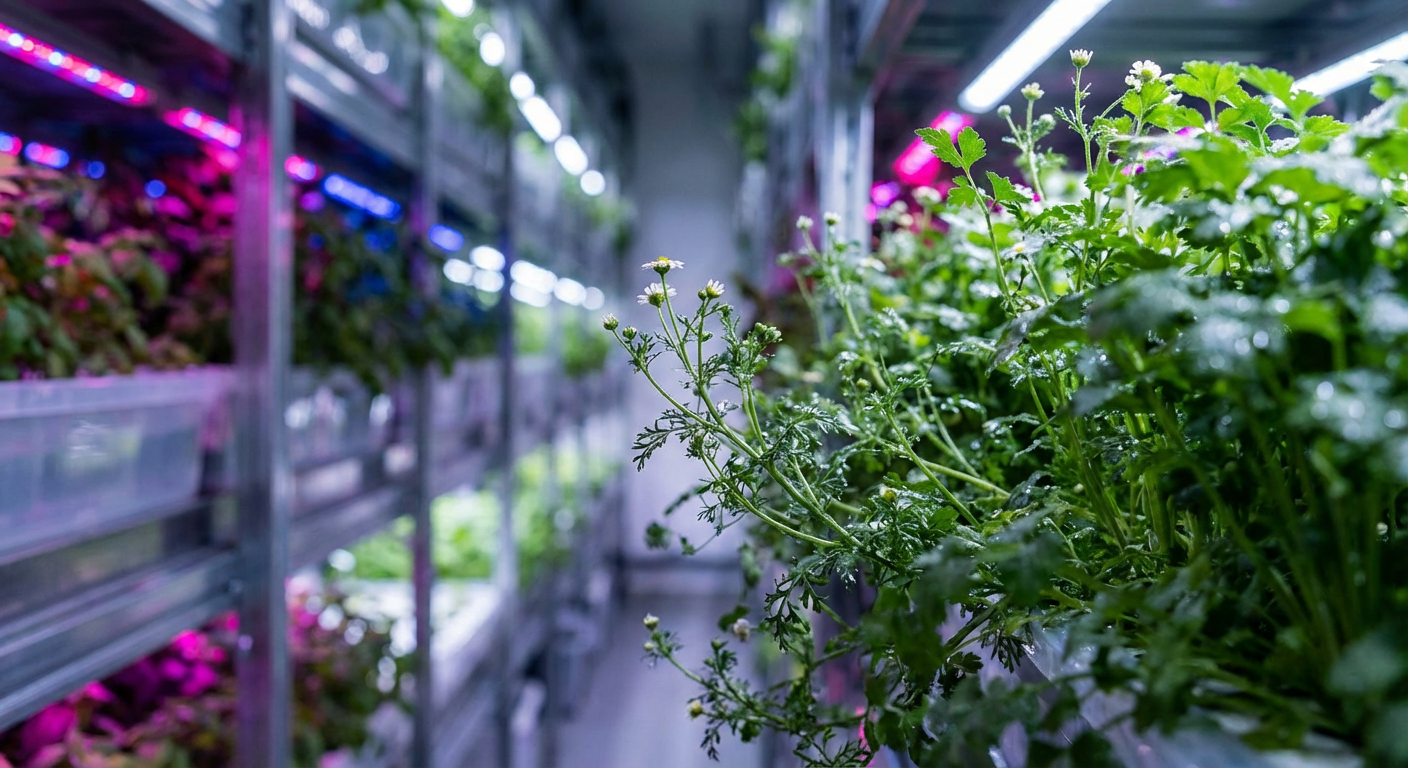
Innovation in ingestible beauty encompasses not only novel ingredients but also sustainable sourcing, advanced delivery mechanisms, and personalized nutrition. These areas are critical for future market differentiation. Sustainable sourcing, especially given the impending impact of the EUDR on tropical supply chains, positions vertical farming as a critical component. Ingredients grown in controlled environments offer consistent quality, potency, and traceability. Supernormal Greens' proprietary abiotic/biotic stress protocols, for example, upregulate secondary metabolites, leading to 3–30x higher potency than field-grown alternatives.
Advantages of Controlled Environment Agriculture for Ingestibles
Batch-to-Batch Consistency: Mitigates seasonal variations and environmental stressors affecting bioactive content.
Pharma-Grade Cleanliness: Achieves microbial cleanliness required for high-value ingestible applications.
Zero Pesticides: Ensures product purity, eliminating concerns over agricultural residues.
Full European Traceability: Guarantees transparency from seed to extract, complying with stringent regulatory demands.
Lifecycle Assessment data (Martin, 2023) indicates a 0.72 kg CO₂-eq/kg output for Supernormal Greens, significantly lower than the vertical farm average (1.9 kg CO₂-eq/kg) and imported alternatives (1.4 kg CO₂-eq/kg). This sustainability profile offers a strong value proposition for brands prioritizing environmental responsibility.
Smart Delivery Systems
The trend towards personalized nutrition is also influencing delivery systems. Encapsulation technologies protect sensitive bioactives from degradation in the digestive tract, ensuring targeted release and enhanced bioavailability. New formats, such as personalized subscription boxes, are gaining traction. Strategic ingredient selection and delivery are vital to address consumer demand for efficacy and sustainability. This convergence of market trends and technological advancements defines the next generation of ingestible beauty products.
Regulatory Landscape and Consumer Education Challenges
Navigating the regulatory environment in the ingestible beauty sector, particularly in the EU, presents significant challenges but also ensures consumer safety and product integrity. Compliance directly impacts market access and consumer trust.
What health claims are approved by EFSA for beauty supplements?
In the EU, health claims for beauty supplements are strictly regulated under Regulation (EC) No 1924/2006. EFSA's approvals are highly specific, and currently, there are no authorized health claims explicitly using terms like "anti-aging" or "wrinkle reduction" for beauty products. Claims must relate to established physiological functions, like "Vitamin C contributes to normal collagen formation for the normal function of skin." The European Food Safety Authority (EFSA) scrutinizes all health and nutrition claims. This strict oversight means that terms commonly used in topical beauty contexts often cannot be directly translated to ingestible product labeling.
Regulatory Pathways for Novel Ingredients
Ingredients without a documented history of safe use within the EU prior to May 1997 fall under the Novel Food Regulation (EU 2015/2283). This necessitates a comprehensive safety assessment and explicit authorization by the European Commission before market entry.
Which new ingredients have received EU Novel Food approval recently?
Recent EFSA assessments have granted safe novel food status to several ingredients. These include L-ergothioneine, with an approved daily dose up to 30 mg, and spermidine-rich wheat germ extract. Nicotinamide Riboside (NR) also has prior approval with specific dosage limitations. NutraIngredients reports that key longevity ingredients like L-ergothioneine and spermidine-rich wheat germ extract have successfully navigated these stringent requirements. EFSA has also issued positive safety opinions on calcidiol monohydrate, L-5-methyltetrahydrofolate (L-5-MTHF), and magnesium L-threonate.
What differentiates EU vs U.S. regulatory pathways for nutricosmetics?
The EU regulatory pathway for nutricosmetics is characterized by rigorous pre-market authorization for both health claims and novel ingredients, requiring EFSA approval. In contrast, the U.S. operates under the Dietary Supplement Health and Education Act (DSHEA) framework, which primarily focuses on post-market surveillance. This fundamental difference means that while U.S. companies have greater flexibility in introducing products, EU companies must invest significantly in data generation and regulatory submissions. This creates both barriers and clear competitive advantages for compliant suppliers.
Are there safety or regulatory risks when using botanical extracts in ingestibles?
Yes, significant safety and regulatory risks exist when using botanical extracts in ingestibles. These include potential for acute or chronic toxicity, interactions with medications, inconsistent bioactive concentrations, and the need for Novel Food approval in regions like the EU if there's no history of pre-1997 use. Botanical extracts also require careful quality control to ensure consistent bioactive levels and freedom from contaminants. Supernormal Greens' ability to deliver 3–30x higher potency with pharma-grade microbial cleanliness and full European traceability directly addresses these concerns. Formulating ingestible beauty products requires careful consideration of these factors to ensure product safety and regulatory compliance.
Frequently Asked Questions
What is the projected CAGR of the ingestible beauty market through 2030?
The ingestible beauty market is projected to grow with a Compound Annual Growth Rate (CAGR) ranging from 8.07% to 11.4% through 2031, with variations depending on specific market analyses. For instance, InsightAce Analytics forecasts an 11.4% CAGR to 2031, while SNS Insider projects an 8.07% CAGR through 2033.
Which regions offer the highest growth potential for nutricosmetics?
Asia Pacific (APAC) offers the highest growth potential for nutricosmetics, holding a dominant market share of 41.75% to 70.22% and demonstrating the fastest growth rate. North America, with approximately 20-24% market share, also presents significant growth opportunities.
What are the most popular ingredient categories in skin‑focused ingestible products?
The most popular ingredient categories in skin-focused ingestible products include collagen peptides, hyaluronic acid, vitamins C and E, coenzyme Q10, ceramides, and various botanical antioxidants. These ingredients are chosen for their roles in supporting skin hydration, elasticity, and protection against oxidative damage.
Which new ingredients have received EU Novel Food approval recently?
Recently, L-ergothioneine (up to 30 mg/day) and spermidine-rich wheat germ extract have received EU Novel Food status. Nicotinamide Riboside (NR) also has prior approval with specific dosage limits.
What health claims are approved by EFSA for beauty supplements?
EFSA does not approve health claims explicitly using terms like "anti-aging" or "wrinkle reduction" for beauty supplements. Approved claims must pertain to established physiological functions, such as "Vitamin C contributes to normal collagen formation for the normal function of skin."
How should dosing be approached for emerging ingredients like NR or ergothioneine?
Dosing for emerging ingredients like NR or ergothioneine must strictly adhere to the limits established in their respective Novel Food authorizations. For example, NR Chloride is typically approved up to 300 mg/day for adults, while L-ergothioneine is authorized up to 30 mg/day. Exceeding these limits can result in legal non-compliance.
How can Supernormal Greens align with beauty brands’ expectations for ingestible offerings?
Supernormal Greens aligns with beauty brands' expectations by providing high-potency, pharmaceutical-grade botanical extracts with 3–30x higher secondary metabolite content compared to field-grown alternatives. Our process ensures batch-to-batch consistency, zero pesticides, optimal microbial cleanliness, and full European traceability, meeting the demanding quality and regulatory standards of the ingestible beauty market.
What differentiates EU vs U.S. regulatory pathways for nutricosmetics?
The EU regulatory pathway mandates pre-market authorization for novel ingredients and for all health claims via EFSA. The U.S. operates under the Dietary Supplement Health and Education Act (DSHEA), primarily relying on post-market surveillance and generally permitting product introduction without pre-approval, provided ingredients are deemed safe and claims are truthful and not misleading.
What formats (gummies, capsules, powders) are most attractive to consumers and retailers?
Gummies, capsules, and powders are highly attractive to consumers due to their convenience, ease of use, and diverse palatability options. Retailers favor these formats for their broad market appeal, extensive shelf life, and proven commercial success. The ingestible beauty market is defined by rapid expansion and evolving consumer expectations for efficacy, safety, and sustainability. For B2B buyers in this sector, strategic sourcing of high-quality, compliant ingredients is paramount for product differentiation and market success. Leveraging advanced cultivation technologies, such as those that deliver highly potent and traceable botanicals, will be critical for meeting stringent regulatory demands and consumer trust. Contact Supernormal Greens to request samples and specifications.