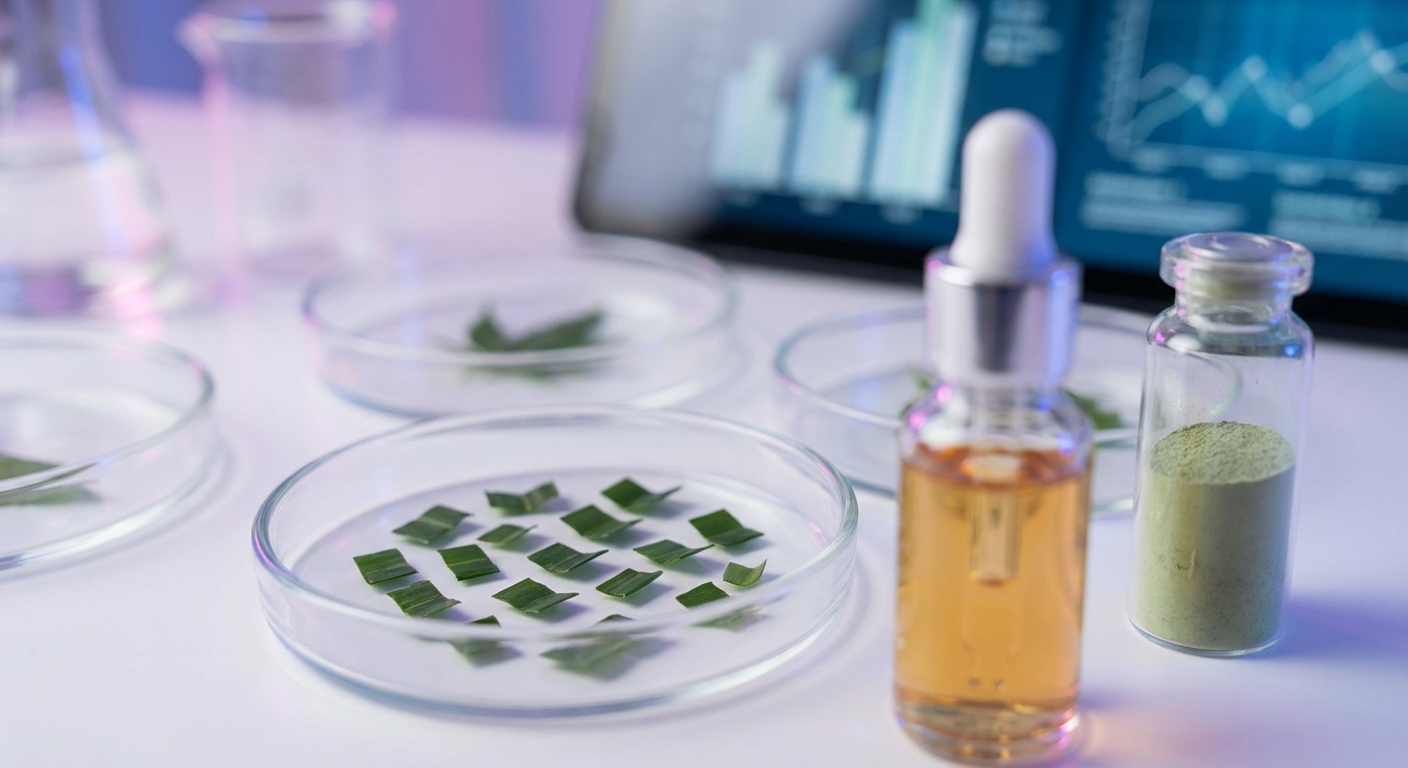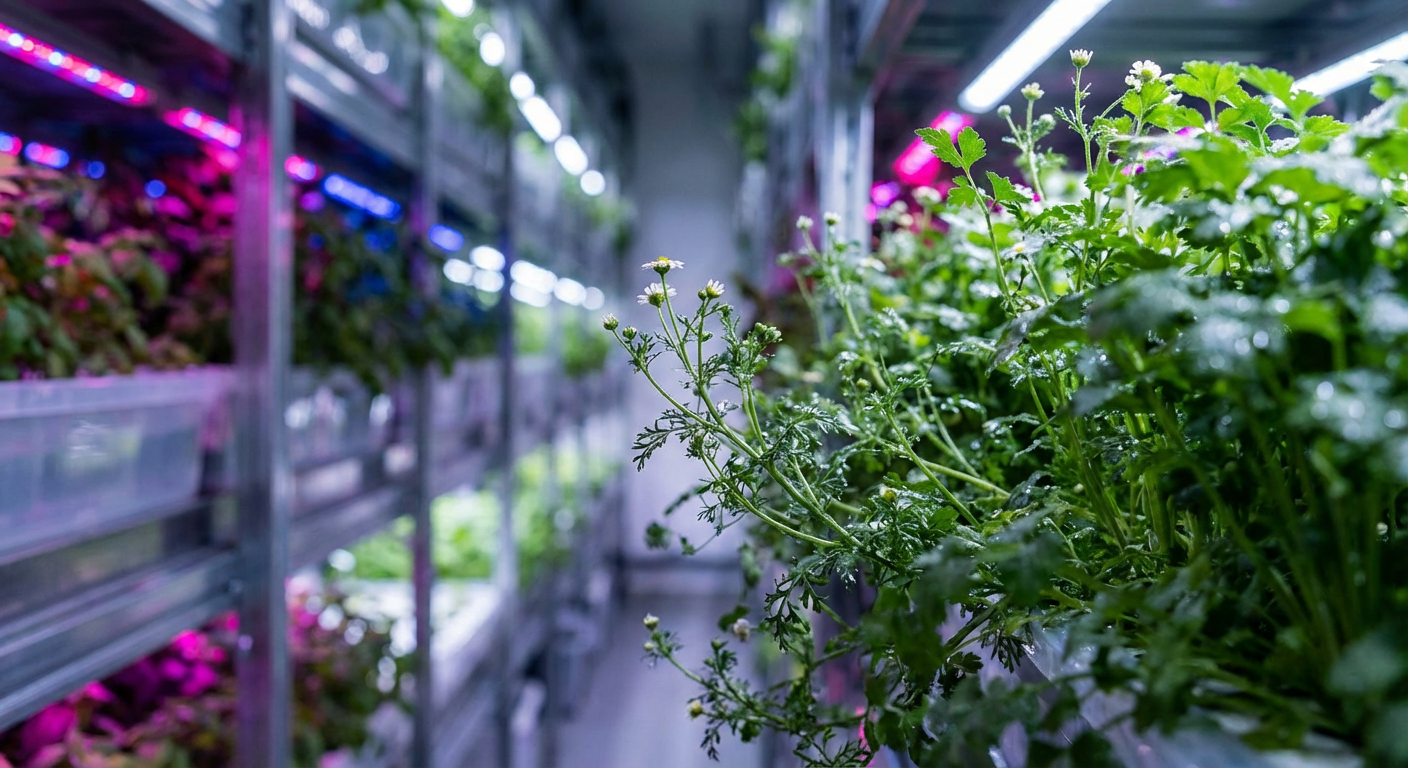


The Future of Sourcing: Why Controlled Environment Agriculture is Revolutionizing Cosmetic Ingredients
Quick answer
The cosmetic industry faces increasing scrutiny over ingredient sourcing, driven by consumer demand for transparency and escalating regulatory pressures like the EU Deforestation Regulation (EUDR). These factors necessitate robust, traceable, and sustainable supply chains for botanical actives.
This article explores how Controlled Environment Agriculture (CEA) addresses these challenges, offering a pathway toward enhanced potency, purity, and sustainability in cosmetic ingredient procurement.
Key Takeaways
CEA enables precise control over botanical active compound profiles.
Enhanced traceability and batch consistency support EU regulatory compliance.
Significant reductions in water and land use improve sustainability metrics.
Vertical farming mitigates supply chain risks from geopolitical instability.
Overview of CEA Applications in Cosmetic Ingredient Production
Controlled Environment Agriculture (CEA) fundamentally redefines botanical cultivation by optimizing growth conditions. This precision agriculture method applies to high-value cosmetic ingredients, enabling unprecedented control over their phytochemical profiles and overall quality.
Cultivation parameters such as light spectrum, temperature, humidity, CO₂, and nutrient delivery are meticulously managed to trigger targeted secondary metabolite upregulation via xenohormesis protocols (UV-B, drought, MeJA, salinity, elicitors).
Targeted Bioactive Accumulation in CEA
The ability to precisely control plant stressors in CEA environments directly impacts the concentration of desired active compounds. For instance, UV-B exposure can stimulate flavonoid synthesis, while specific elicitors can increase phenolic acid levels.
Enhanced Potency: Secondary metabolite levels can be 3–30 times higher than field-grown counterparts. This potency translates to more effective cosmetic formulations with lower inclusion rates.
Batch-to-Batch Consistency: Controlled conditions minimize seasonal and environmental variability. This ensures that every batch of raw material exhibits a consistent active ingredient profile.
Customizable Profiles: Growth protocols can be fine-tuned to favor specific compounds. This allows for bespoke ingredient development tailored to unique formulation requirements.
These capabilities contribute to reliable, high-performing raw materials that meet strict quality control standards for cosmetic applications.
Case Studies: Tower Farm, Capsum, Vertical‑Farm‑Derived Actives
The adoption of vertical farming in the cosmetic sector is growing, evidenced by leading brands and ingredient suppliers integrating these methods. These case studies highlight the practical application and benefits of CEA-derived botanicals.
Brands like Ulé, for example, leverage CEA to produce specialized ingredients. Their use of "Super-Lycopene Hydrosol" from hydroponically-grown tomatoes exemplifies the potential for novel, high-performance actives.
Pioneering Brands and Innovations
Several companies are making strides in developing and utilizing vertical-farmed ingredients. These innovators demonstrate the commercial viability and technological advancements within this niche.
Ulé Beauty: Developed an antioxidant-rich ingredient using vertical cultivation of tomatoes. This showcases the ability to produce functional cosmetic ingredients with enhanced properties.
Vertigo Farms: A Polish startup focused on supplying vertical-farmed botanicals for the beauty industry. Their work contributes to a cleaner, more sustainable ingredient supply.
BAZ&CO: Utilizes vertical farming for ingredients like basil essential oil. This method significantly reduces water consumption by up to 95% compared to conventional agriculture methods, as documented in eco-innovation reports.
Such examples illustrate a clear shift towards technologically advanced and environmentally responsible sourcing methods.
Scientific Evidence: Apigenin in Vertical‑Farmed Chamomile and Parsley
Scientific exploration solidifies the benefits of CEA for specific phytochemicals in cosmetic ingredients. One such example is the enhanced production of apigenin, a flavonoid with documented dermatological benefits, in plants like chamomile and parsley when grown under controlled conditions.
Research indicates that precise management of environmental factors within CEA systems can significantly upregulate secondary metabolite biosynthesis, leading to higher concentrations of desirable compounds.
Optimizing Apigenin Content Through CEA Protocols
Targeted stress protocols and environmental adjustments in vertical farms play a crucial role in maximizing active compound yields. By manipulating light cycles, spectral quality, and nutrient profiles, specific biosynthetic pathways can be stimulated.
Light Spectrum Optimization: Altering UV-B radiation or blue light intensity can increase apigenin production in certain species. This allows for bespoke active compound ratios.
Nutrient Modulation: Specific nutrient deficiencies or enrichments, carefully applied, can act as elicitors, pushing plants to produce higher levels of protective secondary metabolites.
Abiotic Stress Simulation: Controlled drought or temperature fluctuations mimic natural stressors, triggering defense mechanisms that often involve the synthesis of valuable compounds like apigenin.
These precise methods ensure not only higher content but also a predictable and consistent phytochemical profile, which is critical for cosmetic formulation stability and efficacy.
"Elicitation strategies in controlled systems provide a practical route to enhance specific bioactive compounds without relying on genetic modification. The key advantage is not only increased metabolite levels, but the ability to consistently reproduce those profiles across production cycles. This reproducibility is essential for translating plant chemistry into reliable industrial applications."
Shirin Moradi, Senior Plant Scientist, Supernormal greens
Environmental and Sustainability Impacts of Vertical Farming
Vertical farming presents a compelling solution for sustainable ingredient sourcing amid increasing environmental concerns and regulatory initiatives like the EUDR. Its operational model offers substantial reductions in ecological footprint compared to traditional agriculture.
A comprehensive modeling study of vertical farming sustainability demonstrates how energy, water, cost, and carbon factors are integrated to assess viability across diverse global locations.
Key Environmental Advantages
The inherent design of CEA systems contributes to significant environmental benefits. These advantages address pressing concerns regarding resource depletion and pollution.
Water Conservation: Recirculating hydroponic or aeroponic systems reduce water usage by up to 90-95% compared to field farming. This is observed in ingredient sources like vertical-farmed basil essential oil.
Land Use Efficiency: Vertical stacking allows for high-density cultivation in urban or peri-urban environments, minimizing agricultural land conversion and habitat destruction.
Pesticide Elimination: Closed environments preclude pests, eliminating the need for synthetic pesticides and herbicides, leading to cleaner ingredients and reduced environmental runoff.
Reduced Carbon Footprint: Localized production minimizes transportation emissions. Furthermore, Supernormal Greens' LCA (Martin, 2023) shows 0.72 kg CO₂-eq/kg, significantly lower than the vertical farm average (1.9 kg CO₂-eq/kg) and imported botanicals (1.4 kg CO₂-eq/kg).
These environmental efficiencies position CEA as a frontrunner for future sustainable cosmetic ingredient supply.
Meeting EUDR Compliance and Beyond
The forthcoming EU Deforestation Regulation (EUDR) poses significant challenges for traditional sourcing, with projections indicating 35–55% of tropical supply chains may not comply by 2027. Vertical farming offers a systemic solution for 100% EUDR compliance by design.
Beyond EUDR, the commitment to responsible sourcing is critical. What is controlled environment agriculture enables full transparency and traceability.
Emerging Technologies: AI, Biotech, and Microalgae in Ingredient Sourcing
The future of cosmetic ingredient sourcing is increasingly intertwined with advanced technologies beyond basic CEA infrastructure. Artificial intelligence (AI), biotechnology, and the cultivation of microalgae are poised to further revolutionize the industry by enhancing efficiency, expanding ingredient diversity, and tailoring molecular composition.
These innovations offer avenues for creating highly specific active compounds and optimizing production processes. For formulators evaluating alternatives, tulsi extract offers complementary bioactives worth considering.
Leveraging AI for Phytochemical Optimization
AI algorithms can process vast datasets from CEA environments, correlating specific growth parameters with metabolite profiles. This enables predictive modeling for maximizing desired bioactives.
Predictive Analytics: AI can forecast optimal harvesting times and environmental adjustments to achieve peak concentrations of target compounds.
Gene Expression Mapping: Machine learning identifies genetic pathways activated by specific stressors, guiding bioengineering efforts to enhance compound production.
Process Automation: AI-driven robotics can automate planting, harvesting, and phenotyping, increasing operational efficiency and data consistency.
Biotechnology and Microalgae for Novel Actives
Biotechnology offers tools for targeted genetic manipulation, while microalgae present a highly sustainable platform for producing diverse functional ingredients.
Microalgae can produce a wide array of compounds, including pigments, lipids, proteins, and antioxidants. Their rapid growth rates and minimal land footprint make them attractive for cosmetic applications.
Gene Editing: CRISPR technology can enhance biosynthetic pathways in plants, boosting the production of specific cosmetic actives.
Cellular Agriculture: Cultivating plant cells in bioreactors allows for precise control over metabolite synthesis, uncoupling production from field-based risks.
Microalgae Biorefineries: Controlled cultivation of microalgae yields omega fatty acids, astaxanthin, and phycocyanin – potent antioxidants and anti-inflammatory agents for high-value cosmetic use.
These technologies promise to unlock new sources of potent, pure, and sustainably produced cosmetic ingredients.
Market Trends and Industry Adoption in Sustainable Cosmetic Sourcing
The cosmetic industry is experiencing significant shifts driven by consumer demand for sustainability, transparency, and efficacious natural ingredients. These trends align closely with the capabilities of CEA, accelerating its adoption as a preferred sourcing method.
The market for natural fragrance ingredients, particularly tropical leaf terpenes, faces acute supply shortages and price premiums (3-5x) due to climate change and geopolitical instability. This creates a critical market opening for localized, vertical-farmed alternatives.
Regulatory Drivers and Consumer Expectations
Stricter regulations and consumer awareness are compelling brands to reassess their supply chains.
Clean Beauty Movement: Consumers seek products free from synthetic pesticides, heavy metals, and microplastics. CEA ensures microbial cleanliness and zero pesticide use.
Traceability and Transparency: Demand for full supply chain visibility is rising. Vertical farming vs traditional farming ingredients offers unparalleled batch-level data.
Sustainability Metrics: Brands face pressure to report on environmental impact. CEA's low carbon footprint and water usage are significant advantages.
Impact on Global Supply Chains
Global supply chain volatility, exacerbated by climate change and political events, underscores the need for localized and resilient sourcing strategies.
The EU Critical Raw Materials Act also highlights the strategic importance of securing diversified and reliable sources for key industrial inputs. Vertical farming contributes to supply chain resilience by reducing reliance on distant, vulnerable ecosystems.
For example, the hair loss market, exceeding €12 billion, is currently impacted by inconsistent supply of ingredients like bhringraj (Eclipta prostrata), a problem mitigated by controlled indoor cultivation.
Frequently Asked Questions
How does CEA enhance consistency of cosmetic active ingredients?
CEA enhances ingredient consistency by precisely controlling environmental parameters such as light, temperature, humidity, and nutrient delivery. This controlled environment minimizes variability caused by weather, soil conditions, or seasonality, leading to predictable and uniform active compound profiles (Review on vertical farming as sustainable production system, 2026).
What safety assessments are required for novel botanical ingredients in the EU?
Novel botanical ingredients in the EU require comprehensive safety assessments, including a Cosmetic Product Safety Report (CPSR) under EC Regulation 1223/2009. This involves identity, purity, toxicological profile, and detailed risk assessment covering irritation, sensitization, phototoxicity, genotoxicity, and systemic toxicity. A decision-tree approach helps guide this tiered evaluation (2026).
How can vertical‑farmed ingredients meet EU cosmetic regulation requirements?
Vertical-farmed ingredients can readily meet EU cosmetic regulation requirements through enhanced traceability, consistent compositional data, and microbial cleanliness. The controlled environment facilitates comprehensive documentation of cultivation conditions and input materials, supporting the detailed information needed for the Cosmetic Product Safety Report (CPSR).
What are the environmental benefits of sourcing ingredients via vertical farming?
Sourcing ingredients via vertical farming offers significant environmental benefits, including drastic reductions in water usage (up to 95%), minimized land footprint, elimination of synthetic pesticides and herbicides, and reduced transportation emissions due to localized production (Eco-innovation in vertical-farm-sourced ingredients, 2023).
Which cosmetic actives have regulatory concentration limits in the EU?
The EU sets strict concentration limits for several cosmetic actives, including retinol (≤0.3%), arbutin derivatives (e.g., ≤2%), and a growing list of fragrance allergens, some of which require labeling above specific thresholds (Cosmetics & Toiletries, 2024, CBI industry guidance, 2023).
How do PFAS and microplastics regulations affect ingredient sourcing for cosmetics?
PFAS and microplastics regulations in cosmetics are increasing globally, pushing the industry toward cleaner, biodegradable, and traceable botanical sources. Vertical farming offers a solution by providing PFAS-free and microplastic-free ingredients, aligning with future regulatory compliance and consumer demand for clean beauty (CEHTRA blog on PFAS regulatory trends, 2026).
What successful brands use vertical‑farm‑derived botanicals?
Brands like Ulé and Vertigo Farms have successfully integrated vertical-farm-derived botanicals into their cosmetic product lines. Ulé utilizes ingredients such as "Super-Lycopene Hydrosol" from hydroponically grown tomatoes, while Vertigo Farms specializes in providing various vertical-farmed botanicals for beauty applications (Industry report on indoor ag and cosmetics, 2022).
How can CEA contribute to batch traceability for ingredient quality control?
CEA inherently supports robust batch traceability by controlling every growth parameter from seed to harvest. Each batch can be linked to precise cultivation data, including nutrient recipes, light exposure, and specific stress protocols, enabling comprehensive quality control and swift identification of deviations.
What economic models assess vertical farming viability for botanical production?
Economic models assessing vertical farming viability consider integrated factors such as energy consumption, water usage, capital expenditure, operational costs, and carbon footprint. These models evaluate profitability across various scenarios and global locations to determine optimal strategies for botanical production (Comprehensive modeling study of vertical farming sustainability, 2025).
What is the decision-tree approach for safety assessment of botanicals?
A decision-tree approach for botanical safety assessment involves a tiered evaluation process starting with historical safe use data. Subsequent steps include in vitro testing (e.g., irritation, phototoxicity), in silico modeling, and, if necessary, targeted in vivo studies, ensuring a thorough assessment of irritation, sensitization, and systemic toxicity for cosmetic ingredients (Safety assessment decision tree for botanical cosmetic ingredients, 2026).
The shift towards CEA in cosmetic ingredient sourcing is not merely an innovation but a strategic imperative. It addresses critical industry needs for purity, potency, consistency, and verifiable sustainability.
Contact Supernormal Greens to request samples and specifications.