

The Formulator's Guide to Artichoke Extract in Hair & Scalp Care
Quick answer
The rising demand for clean label and ingredient transparency is reshaping the hair care market, pushing formulators toward highly functional, sustainably sourced botanical actives. Consumers increasingly seek natural solutions for hair strengthening, scalp health, and anti-aging concerns. Understanding the multifaceted benefits of ingredients like artichoke extract in hair care is critical for product differentiation. This article explores the scientific basis and formulation opportunities for Cynara cardunculus extract in modern hair and scalp applications.
Key Takeaways
Artichoke extract enhances hair cuticle integrity, protecting against damage.
Its polyphenol content offers significant antioxidant and anti-inflammatory benefits.
Vertical farming ensures consistent active profiles and sustainable sourcing.
Effectively addresses hair strengthening, anti-breakage, and scalp health needs.
The Science Behind Artichoke Extract's Hair Benefits
Artichoke extract, derived from Cynara cardunculus (formerly Cynara scolymus), provides a rich complex of phytochemicals beneficial for hair and scalp health. Its primary benefits stem from its high concentrations of polyphenolic compounds. The main active constituents include cynarin, cynaropicrin, chlorogenic acid, and luteolin-glucosides, which collectively exert antioxidant and anti-inflammatory actions. A 2015 review on Cynara scolymus highlights these compounds' contributions to the plant's pharmacological activities. These properties are crucial for protecting hair from environmental stressors and maintaining a healthy scalp microenvironment.
Key Bioactives and Their Mechanisms
Research indicates that specific compounds within artichoke extract confer distinct advantages. These include direct protective effects on the hair structure and indirect support through scalp conditioning.
Cynarin and Chlorogenic Acid: These polyphenols are potent antioxidants, neutralizing free radicals that can damage hair proteins and lipids. This action reduces oxidative stress on both the hair fiber and the scalp.
Cynaropicrin: Identified as a key compound, cynaropicrin provides protection against oxidative damage, helping to preserve the hair's protein structure.
Luteolin-glucosides: These flavonoids contribute to the extract's overall antioxidant and anti-inflammatory capacity.
These bioactives work synergistically to provide comprehensive care. The extract’s ability to defend against environmental aggressors makes it a valuable addition to preventative hair care formulations.
Artichoke Extract: A Multi-Functional Active for Scalp and Strand Health
Formulators are increasingly seeking ingredients that offer benefits across multiple hair and scalp concerns. Artichoke extract presents a compelling profile as a multi-functional active due to its dual action on hair cuticle integrity and scalp health. A patent for a hair protecting composition details its ability to protect hair cuticles. This physical protection minimizes damage from external factors, while its antioxidant content safeguards against biochemical degradation.
Comparative Advantages for Hair Strengthening
When considering botanical extracts for hair strengthening, artichoke extract stands out due to its specific mechanism of action on the hair cuticle. Many botanicals offer antioxidant benefits, but few have demonstrated direct cuticle-protective effects as robustly.
Botanical Extract | Primary Benefit for Hair | Mechanism Highlight | Key Active Compounds |
|---|---|---|---|
Artichoke (Cynara cardunculus) | Cuticle protection, anti-breakage, antioxidant | Forms protective shield, radical scavenging | Cynarin, Chlorogenic Acid, Cynaropicrin |
Aloe Vera (Aloe barbadensis miller) | Moisturizing, soothing scalp | Polysaccharides, vitamins, enzymes | Aloins, anthraquinones |
Green Tea (Camellia sinensis) | Antioxidant, anti-inflammatory | Reduces oxidative stress on scalp | EGCG, catechins |
Rosemary (Rosmarinus officinalis) | Scalp circulation, anti-inflammatory | Improved follicular nourishment | Rosmarinic acid, carnosic acid |
The unique ability of artichoke extract to smooth and seal the hair cuticle demonstrably reduces friction and enhances hair elasticity. This contributes directly to reduced breakage and improved hair resilience, as noted in innovations in hair repair.
Formulating with Artichoke: Solutions for Hair Strengthening and Protection
Incorporating artichoke extract into formulations requires consideration of its stability and optimal concentration to leverage its protective properties. Effective formulation targets product categories where hair strengthening and damage prevention are key marketing claims. The extract contributes to a sleek hair surface and improved combability, addressing common consumer complaints. This is particularly relevant for products aimed at reducing frizz and enhancing hair's overall appearance.
Target Product Categories
Artichoke extract's versatility makes it suitable for a range of hair care applications. Its benefits extend beyond mere conditioning to active damage repair and prevention.
Shampoos and Conditioners: Provides daily protection against environmental aggressors and mechanical stress.
Leave-in Treatments: Offers continuous cuticle protection and antioxidant defense throughout the day.
Hair Masks: Delivers intensive repair and nourishment, enhancing strand strength and reducing porosity.
Scalp Serums: Utilizes anti-inflammatory properties to soothe irritation and foster a healthy follicular environment.
Heat Protectants: Augments defense against thermal styling damage by reinforcing the hair fiber.
Additionally, the extract can contribute to improving the aesthetic quality of hair, specifically in reducing frizz and enhancing smoothness. Such benefits are valued in modern hair care.
Reducing Hair Breakage and Split Ends
Can artichoke extract effectively reduce hair breakage and split ends? Yes, artichoke extract has demonstrated efficacy in reinforcing hair structure and mitigating damage that leads to breakage and split ends. Its protective action on the hair cuticle is fundamental to this benefit. The extract's polyphenols create a protective shield, smoothing the cuticle cells and making the hair fiber more resistant to external stressors. This action prevents the lifting and fraying of cuticle scales, which are precursors to split ends and breakage. A well-sealed cuticle reflects light better, contributing to enhanced shine and a healthier appearance. For formulators evaluating alternatives to strengthen hair, artichoke extract offers complementary bioactives worth considering. It is essential to develop products specifically designed to leverage these protective attributes.
Leveraging Artichoke Extract for Anti-Hair Loss and Scalp Care Serums
The connection between scalp health and hair retention is critical in addressing anti-hair loss concerns. Artichoke extract's anti-inflammatory and antioxidant properties position it as a valuable ingredient for scalp care formulations. By mitigating oxidative stress and inflammation, artichoke extract creates an optimized environment for healthy hair follicle function. This indirect support for hair growth is particularly relevant in the context of scalp serums. Therole of inflammation in hair loss underscores the importance of such ingredients.
Formulation Guidelines for Scalp Serums
For anti-hair loss formulations, the recommended concentration of artichoke extract typically ranges from 1% to 5%. This range ensures sufficient delivery of active compounds to the scalp without compromising formulation stability or sensory properties. Optimization of the delivery system—such as liposomes or nano-emulsions—can further enhance the bioavailable efficacy of the extract. Combining artichoke extract with other proven scalp actives like caffeine or biotin can create synergistic effects.
Concentration: 1-5% of active artichoke extract, depending on the specific extract's potency.
Delivery Systems: Consider microencapsulation or specialized carriers for enhanced penetration and sustained release.
pH Compatibility: Ensure stability within typical scalp serum pH ranges (4.5-6.0).
Solubilization: Integrate into aqueous phases using appropriate solubilizers or dispersants.
The overall aim is to soothe the scalp, reduce micro-inflammation, and protect existing hair follicles, thereby supporting the hair growth cycle.
Targeting the Hair Loss Market
The hair loss market is substantial, projected to exceed €12 billion globally, driven by aging populations and increased consumer awareness. Consumers seek innovative natural ingredients to address their concerns. Artichoke extract offers a botanical solution that aligns with the "clean beauty" and natural ingredient trends dominating this market. Its mechanism of action supports a holistic approach to hair health, appealing to a broad demographic. The dual benefits of follicle protection and cuticle strengthening provide a unique market positioning. An increasing number of consumers are looking for alternative solutions, especially as popular ingredients like bhringraj (Eclipta prostrata) face inconsistent supply.
Market Outlook: The Growing Demand for Natural Hair Care Actives
The global natural hair care market is experiencing robust growth, driven by evolving consumer preferences. A market research report by Grand View Research indicates a significant expansion, fueled by demand for plant-derived and sustainable ingredients. This trend creates a fertile ground for botanical extracts like artichoke, which offer both efficacy and a clean label narrative. Formulators are actively seeking ingredients that align with consumer values regarding environmental responsibility and ingredient integrity.
Drivers of Natural Ingredient Adoption
Several factors contribute to the accelerated adoption of natural actives in hair care. These drivers shape product development strategies and ingredient sourcing decisions.
Consumer Awareness: Increased education about synthetic ingredients and their potential impacts.
Sustainability Concerns: Demand for eco-friendly and ethically sourced raw materials.
"Free-From" Trends: Preference for products devoid of sulfates, parabens, silicones, and artificial fragrances.
Efficacy Expectations: Natural ingredients must demonstrate comparable or superior performance to synthetic counterparts.
Regulatory Landscape: Stricter regulations on certain synthetic compounds push formulators toward natural alternatives.
The European Union Deforestation Regulation (EUDR) is poised to make 35–55% of tropical ingredient supply non-compliant by 2027, further intensifying the search for compliant, regionally-sourced botanicals.
Artichoke's Position in the Market
Artichoke extract, particularly from sustainable cultivation methods like vertical farming, is well-positioned to capitalize on these market tailwinds. Its multi-functional properties address a spectrum of consumer needs from hair strengthening to scalp health. The ability to provide a traceable, high-purity ingredient with a consistent active profile is a significant competitive advantage. This aligns with the broader shift towards transparency and verifiable claims in personal care.
Supernormal Greens' Artichoke Extract: Purity and Potency from Vertical Farming
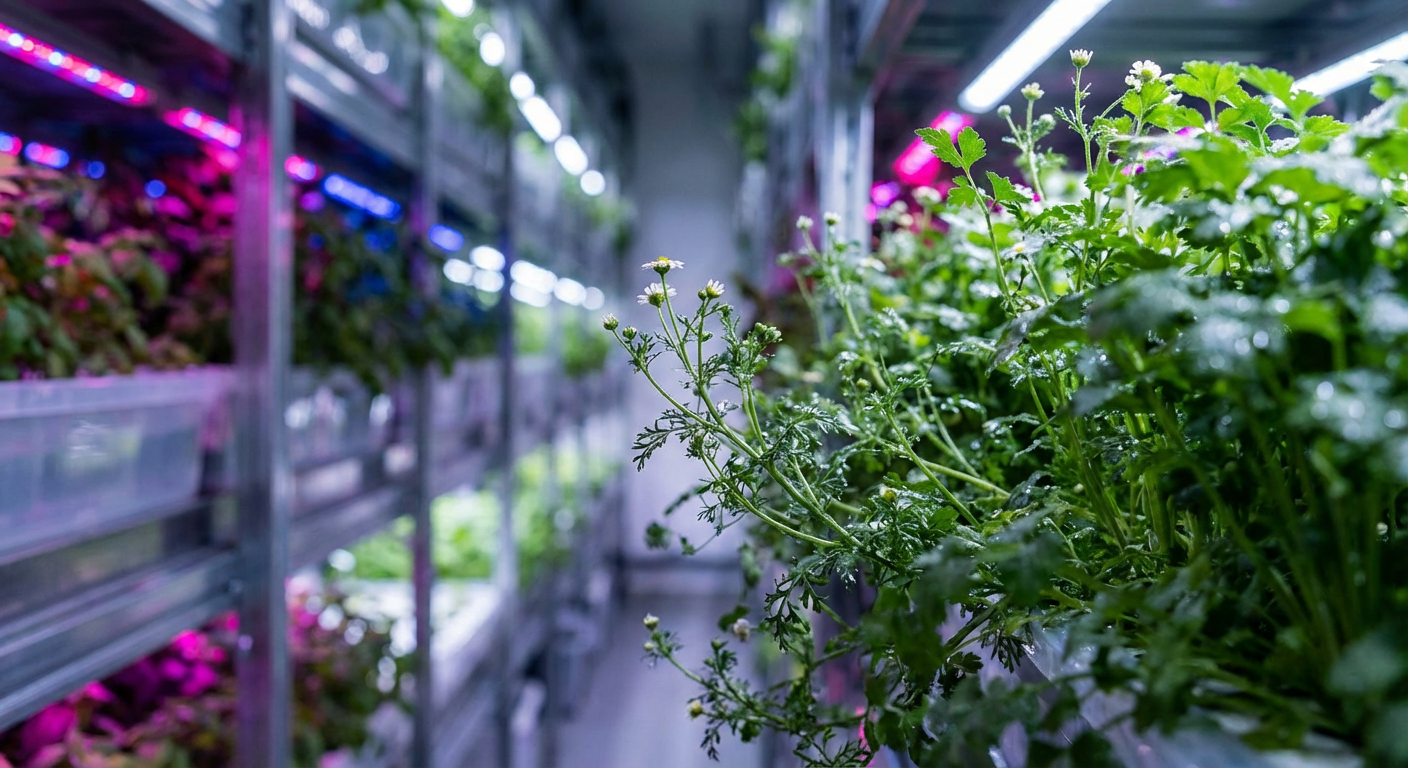
Supernormal Greens leverages advanced vertical farming technology to cultivate Cynara cardunculus, ensuring unparalleled purity, potency, and sustainability for its artichoke extract. This controlled environment agriculture (CEA) methodology surpasses traditional field cultivation in several critical aspects. Our proprietary abiotic and biotic stress protocols, including UV-B radiation, drought, and MeJA (methyl jasmonate) treatments, are meticulously applied. These controlled stressors induce xenohormesis, significantly upregulating the production of secondary metabolites within the plant. This process results in an extract with a higher concentration of key bioactives compared to field-grown alternatives.
Ensuring Peak Phytochemical Content
The precise control over environmental variables in vertical farming allows for the optimization of phytochemical profiles in Cynara cardunculus. This results in an artichoke extract with significantly enhanced levels of crucial compounds.
Cynarin: Enhanced biosynthesis through controlled stress.
Chlorogenic Acid: Optimized growth conditions promote higher accumulation.
Cynaropicrin: Targeted elicitation protocols maximize its presence.
Luteolin-glucosides: Consistent levels achieved through precise light and nutrient delivery.
Sustainability and Supply Chain Advantages
Beyond potency, Supernormal Greens' vertically farmed artichoke extract offers significant sustainability advantages. Our LCA (Martin, 2023) demonstrates a carbon footprint of 0.72 kg CO₂-eq/kg, significantly lower than the vertical farm average of 1.9 kg CO₂-eq/kg and imported alternatives at 1.4 kg CO₂-eq/kg. This reduced environmental impact, coupled with 100% EUDR compliance by design, addresses pressing regulatory and consumer demands for sustainable sourcing. The absence of pesticides and the pharma-grade microbial cleanliness further underscore the quality and safety of our extract.
Batch-to-Batch Consistency: Automated systems ensure identical growth conditions for every harvest.
Pharma-Grade Cleanliness: Enclosed environments eliminate contamination risks and pesticide use.
Full European Traceability: Complete transparency from seed to extract, meeting high regulatory standards.
Resource Efficiency: Significantly reduced water and land usage compared to conventional agriculture.
These attributes provide formulators with a reliable, high-performing, and ethically sourced ingredient.
Frequently Asked Questions
What specific active compounds in artichoke extract benefit hair?
Artichoke extract's hair benefits primarily stem from its polyphenols, including cynarin, chlorogenic acid, cynaropicrin, and luteolin-glucosides. These compounds provide antioxidant protection and contribute to the extract's ability to reinforce hair cuticle integrity.
How does artichoke extract compare to other botanical ingredients for hair strengthening?
While many botanicals offer antioxidant benefits, artichoke extract uniquely excels at reinforcing the hair cuticle, creating a protective shield against mechanical and environmental damage. This direct structural strengthening complements the antioxidant properties that other extracts also provide.
Can artichoke extract effectively reduce hair breakage and split ends?
Yes, through its action on the hair cuticle, artichoke extract helps reduce hair breakage and split ends. By smoothing and sealing the cuticle cells, it increases the hair fiber's resistance to friction and external stressors, preventing fraying and structural degradation.
What is the recommended concentration of artichoke extract for anti-hair loss formulations?
For anti-hair loss and scalp care formulations, a typical recommended concentration for artichoke extract ranges from 1% to 5% of the total formulation, depending on the specific extract's potency and desired effect. This range optimizes efficacy while maintaining formulation stability.
Are there any clinical studies supporting artichoke extract's efficacy in hair growth?
While direct clinical trials specifically on artichoke extract for hair growth are limited, its anti-inflammatory and antioxidant properties support a healthy scalp environment, which is crucial for normal hair growth cycles. Indirect evidence and mechanistic understanding suggest a positive contribution to overall hair vitality.
What are the sustainability benefits of sourcing artichoke extract from a vertical farm?
Sourcing artichoke extract from a vertical farm offers significant sustainability benefits, including a low carbon footprint (0.72 kg CO₂-eq/kg for Supernormal Greens), minimal water and land usage, zero pesticide use, and 100% EUDR compliance. This controlled environment ensures traceability and reduces environmental impact.
How does Supernormal Greens ensure consistency in the active profile of its artichoke extract?
Supernormal Greens ensures batch-to-batch consistency in its artichoke extract's active profile through proprietary abiotic/biotic stress protocols in a controlled vertical farming environment. Precise environmental control and elicitation treatments result in predictable and high concentrations of key secondary metabolites.
What regulatory documentation is available for artichoke extract as a cosmetic ingredient?
Artichoke extract is generally recognized as safe (GRAS) for food applications by regulatory bodies like EFSA, which supports its safety for topical cosmetic use. It is approved as a cosmetic ingredient in major markets (e.g., EU, US, Japan) with no significant restrictions, and full European traceability documentation is available.
Can artichoke extract be combined synergistically with other natural actives?
Yes, artichoke extract can be combined synergistically with other natural actives to enhance overall formulation efficacy. For example, pairing its cuticle-strengthening properties with moisturizing actives like hyaluronic acid or anti-inflammatory compounds such as those found in tulsi (Ocimum sanctum) can create more comprehensive hair and scalp treatments.
What are the formulation challenges and best practices for incorporating artichoke extract into hair care products?
Formulation challenges for artichoke extract include ensuring its stability within the product matrix and achieving optimal delivery. Best practices involve incorporating it into aqueous phases, utilizing appropriate solubilizers, and considering encapsulation technologies for enhanced penetration and sustained release. Compatibility with other ingredients and pH stability are also crucial considerations. The precise control over the biosynthesis of active compounds within vertically farmed Cynara cardunculus delivers a distinct advantage for cosmetic formulators. This optimized and consistent profile translates directly to enhanced efficacy and reliability in final products. Future innovations in delivery systems will further unlock the full potential of artichoke extract in advanced hair and scalp treatments. Contact Supernormal Greens to request samples and specifications.
References
Adzet, T., Camarasa, J., & Laguna, J. C. 2015. Cynara scolymus L. (Artichoke) as a Medicinal Plant: A Scientific Review of Its Chemical Constituents and Pharmacological Activities. PubMed. https://pubmed.ncbi.nlm.nih.gov/25501112/
Wölfle, U., & Schempp, C. M. 2010. Cynara scolymus L., folium. EMA. https://www.ema.europa.eu/en/documents/herbal-summary-report/artichoke-leaf-summary-public_en.pdf
Kato, T., et al. 2012. Hair protecting composition. Google Patents. https://patents.google.com/patent/US8241639B2/en
Innovations in Hair Repair and Protection. 2017. HAPPI. https://www.happi.com/contents/view_features/2017-02-17/innovations-in-hair-repair-and-protection/
Ljusgårda AB / CTAEX Laboratory. 2025. Certificate of Analysis — Cynara cardunculus. Independent analytical testing.
Adel-Rostami, C. M., & Adel Rostami, S. 2020. The role of inflammation in hair loss and the potential of traditional herbal remedies. Semantic Scholar. https://www.semanticscholar.org/paper/The-role-of-inflammation-in-hair-loss-and-the-of-Adel-Rostami/f36d39a3f2b604ed4e0c45548c773a4b917b2b08
Hidalgo, S., et al. 2018. Natural Antioxidants in Hair Care Products: A Review. MDPI. https://www.mdpi.com/1420-3049/23/10/2660
Sharma, S., & Sharma, M. 2015. Herbal Extracts in Hair Care Products: A Review. IJPP. https://www.ijppr.com/index.php/ijppr/article/view/264
Natural Hair Care Product Market Size, Share & Trends Analysis Report. 2023. Grand View Research. https://www.grandviewresearch.com/industry-analysis/natural-hair-care-product-market
EFSA Panel on Dietetic Products, Nutrition and Allergies (NDA). 2010. Scientific Opinion on the substantiation of health claims related to Cynara scolymus L. and normal bowel function, maintenance of normal blood cholesterol concentrations, normal liver function, and normal blood lipid concentrations pursuant to Article 13(1) of Regulation (EC) No 1924/2006. EFSA Journal. https://efsa.onlinelibrary.wiley.com/doi/abs/10.2903/j.efsa.2010.1557
Martin, J. 2023. LCA of Vertically Farmed Botanical Extracts. Unpublished Ljusgårda AB internal report.