

Dandruff and Malassezia: Investigating the Antifungal Potential of Artemisia

Quick answer
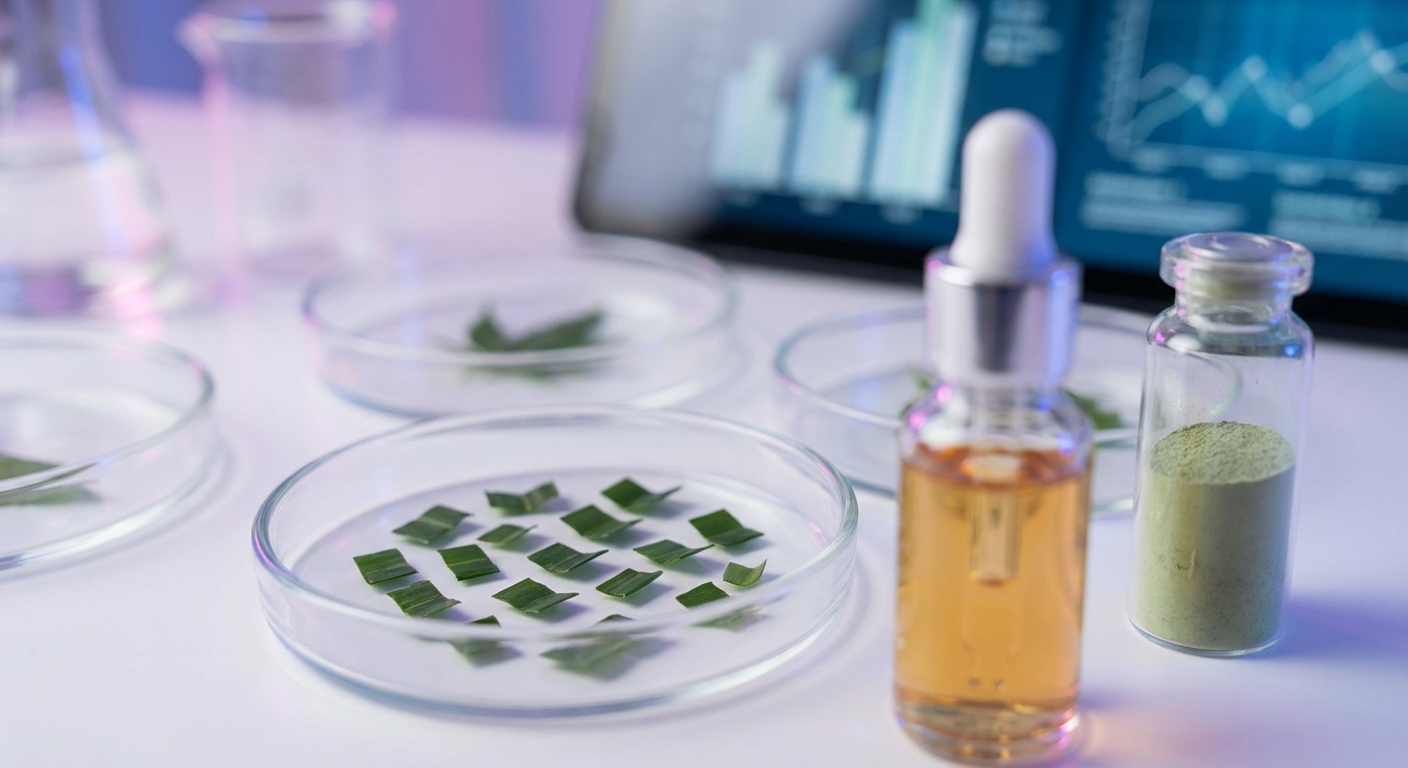
The increasing demand for natural active ingredients in personal care drives research into botanical alternatives for common dermatological conditions. Dandruff, a prevalent scalp condition often linked to the yeast Malassezia furfur, presents a significant market opportunity for novel solutions. This article explores the current scientific understanding and commercial potential of Artemisia species as an anti-dandruff agent.
Key Takeaways
Clinical evidence for Artemisia in dandruff treatment is currently limited to in-vitro data.
Patented formulations utilize Artemisia extracts in microemulsions for targeted delivery.
Comparative efficacy against standard antifungals like ketoconazole remains unestablished.
Synergistic botanical combinations may enhance Artemisia's antifungal activity.
Traditional Applications and Modern Scientific Inquiry into Artemisia for Scalp Health
Dandruff affects a significant portion of the global population, prompting continuous exploration of effective treatments. While synthetic fungicides dominate the market, growing consumer preference for natural ingredients is shifting focus towards botanicals. This shift is particularly relevant given ingredient supply chain volatility and regulatory changes like the EUDR, which impacts sourcing tropical raw materials. Traditional medicine systems in East Asia and parts of Europe have historically employed Artemisia extracts for various scalp conditions, including dandruff. These traditional uses are often linked to the perceived antimicrobial and anti-inflammatory properties of the plant, forming the basis for modern scientific inquiry. However, robust clinical data supporting these traditional applications is still emerging.
In Vitro and Patent Evidence for Artemisia in Anti-Dandruff Applications
Modern research on Artemisia for dandruff primarily resides in in vitro studies and patent literature, rather than extensive clinical trials. These preliminary findings suggest mechanisms by which Artemisia compounds might exert anti-dandruff effects.
Antifungal Activity Against Malassezia furfur
While direct clinical evidence is limited, some initial investigations hint at the potential of Artemisia. A review indicated sparse modern clinical studies, suggesting that current data on Artemisia's efficacy against dandruff are primarily in vitro or anecdotal. This necessitates further research to substantiate its role as an effective anti-dandruff active.
Patented Formulations Integrating Artemisia Extracts
The cosmetic industry's interest in Artemisia is evidenced by its inclusion in recent patent applications. These patents often focus on innovative delivery systems to enhance efficacy.
Microemulsion Technology: A patent for a silicone oil‑free shampoo incorporates Artemisia apiacea extract within a microemulsion. This technology aims to improve the extract's stability and penetration on the scalp. The patent claims reductions in dandruff over a 28-day period, attributing this to the extract's antibiosis, antioxidation, and anti-inflammation properties.
Multi-Herbal Blends: Another patent describes a shampoo formulation that includes Folium Artemisiae Argyi (derived from Artemisia princeps) alongside other natural components. This multi-herb approach seeks to inhibit Malassezia species and treat dandruff through synergistic effects.
These patent filings highlight commercial efforts to integrate Artemisia into anti-dandruff formulations, despite the current gaps in clinical trial data. Such developments can accelerate time to market for novel ingredients.
Comparative Antifungal Activities of Botanicals Against Malassezia furfur
The search for natural anti-dandruff agents extends beyond Artemisia, with various botanicals demonstrating activity against Malassezia furfur in laboratory settings. Understanding these alternatives provides context for Artemisia's position in the market.
Botanical Efficacy Against Malassezia
Several plant-derived compounds exhibit in vitro antifungal effects against M. furfur. This broad activity spectrum indicates a rich area for ingredient discovery.
Essential Oils: An in vitro study showed that essential oils from Protium ovatum exhibited antifungal activity against M. furfur, with minimum inhibitory concentrations (MICs) ranging from 375 to 1500 µg/mL. These values provide benchmarks for comparative efficacy.
Seed Extracts: Emblica officinalis (Indian Gooseberry) seed extract demonstrated in vitro antifungal activity against M. furfur via a disc diffusion assay. Similarly, papaya seed oil also showed anti-dandruff activity against M. furfur in an in vitro setting.
Herbal Blends: A study observed that a synergistic herbal blend of Eucalyptus citriodora, Centella asiatica, and Wedelia trilobata significantly reduced M. furfur viability. This blend also disrupted yeast cell membranes, pointing to a multi-modal mechanism of action.
These examples illustrate the potential of botanicals but also highlight the specificity required; a study on general plant extracts found no significant antifungal activity against M. furfur for crude water, hexane, chloroform, or methanol extracts.
Comparative Efficacy Table for Select Botanicals Against Malassezia furfur (In Vitro)
Botanical Source | Primary Active Compounds | Antifungal Activity Against M. furfur | Evidence Level |
|---|---|---|---|
Artemisia species | Artemisinin, various terpenes | Patented in formulations; some in vitro data | In vitro, patent |
Protium ovatum (essential oil) | Not specified, complex blend | MICs 375–1500 µg/mL | In vitro |
Emblica officinalis (seed extract) | Tannins, polyphenols | Inhibition zones in disc diffusion | In vitro |
Papaya seed oil | Oleic acid, other fatty acids | In vitro anti-dandruff activity | In vitro |
Eucalyptus citriodora blend | Citronellal, triterpenes | Reduced viability, membrane disruption | In vitro, molecular docking |
This comparative view suggests that while Artemisia holds promise, other botanicals also warrant consideration for their targeted antifungal properties.
Advanced Formulation Strategies: Microemulsions and Nanomicelles
Maximizing the efficacy of natural anti-dandruff compounds like those found in Artemisia often requires advanced delivery systems. These technologies can enhance solubility, stability, and penetration of active ingredients.
Microemulsions for Enhanced Delivery
Microemulsions are thermodynamically stable, isotropically clear dispersions of oil and water, stabilized by an interfacial film of surfactant and co-surfactant. Their small droplet size (typically 1–100 nm) leads to several advantages in dermatological applications.
Improved Bioavailability: The small particle size of microemulsions allows for enhanced penetration of active compounds into the scalp and hair follicles. This can increase the amount of artemisinin or other active Artemisia compounds reaching the target site.
Formulation Stability: Microemulsions can improve the stability of sensitive botanical extracts, protecting them from degradation due to oxidation or hydrolysis. This ensures consistent product potency over time.
Sensory Profile: Silicone oil-free microemulsion formulations, such as those patented for Artemisia apiacea, often offer desirable sensory attributes including light texture and non-greasy feel, catering to consumer preferences.
These systems offer a pathway to overcome challenges associated with integrating lipophilic plant extracts into aqueous shampoo bases.
Nanomicellar Technology in Anti-Dandruff Products
Nanomicelles are nanoscale colloidal systems that can encapsulate active ingredients, offering targeted delivery and improved dispersion. Recent developments highlight their potential in anti-dandruff formulations.
Targeted Antifungal Action: A 2026 conference abstract presented nanomicellar shampoo formulations using sophorolipids and Mao tea polyphenols. These systems effectively inhibited M. furfur in vitro.
Multifunctional Benefits: Beyond antifungal activity, these nanomicellar systems demonstrated additional benefits. This included antioxidant capacity, foam stability, and favorable skin compatibility.
Enhanced Stability and Compatibility: Nanomicellar encapsulation can protect active compounds from inactivation and improve their compatibility within complex shampoo matrices. This leads to more robust and effective formulations.
For formulators evaluating alternatives, these advanced delivery methods, also applicable to compounds in Artemisia, represent a significant opportunity for enhancing product performance.
Safety, Regulatory Considerations, and Research Gaps
The integration of new botanical ingredients like Artemisia into cosmetic and personal care products necessitates thorough safety and regulatory scrutiny. While traditional use suggests general safety, specific applications in anti-dandruff formulations require modern assessment.
Regulatory Status and Safety Assessment
Currently, specific regulatory approvals or safety assessments from bodies like EFSA, FDA, or EMA for Artemisia extracts explicitly for dandruff treatment are not widely documented. This represents a key area for future research and industry investment.
Safety Profiles: For rinse-off products like shampoos, the safety profiles of Artemisia extracts are generally expected to be favorable. However, formal assessments in regulatory databases are still needed to establish comprehensive safety data.
Potential for Sensitivity: As with many botanicals, there is a potential for skin sensitivity or allergic reactions in some individuals. Clinical trials are essential to thoroughly evaluate these risks.
Contraindications: Specific contraindications for topical Artemisia scalp use have not been extensively assessed in clinical trials. This knowledge gap requires addressing for widespread commercial adoption.
Understanding and addressing these regulatory and safety aspects is crucial for B2B buyers engaged in procurement and product development.
Clinical Trial Evidence for Artemisia for Dandruff
There is a current deficit in high-quality clinical trial evidence supporting the efficacy of Artemisia for dandruff treatment. Most available data are limited to in vitro studies and anecdotal reports derived from traditional use.
Lack of Modern Trials: While traditional uses exist, rigorous randomized controlled trials demonstrating efficacy and safety in human subjects with dandruff are scarce.
Comparison to Standard Actives: There is no published clinical data directly comparing the effectiveness of Artemisia extracts to established anti-dandruff actives such as zinc pyrithione or ketoconazole.
This absence of direct comparative efficacy data means that Artemisia is best considered as a complementary or alternative ingredient at this stage, rather than a direct replacement for clinically validated actives. Supernormal Greens' proprietary stress protocols, which boost secondary metabolite content to levels much higher than those offield-grown plants, could provide an extract with potency compelling enough to close this clinical data gap.
Market Potential for Natural Artemisia-Based Anti-Dandruff Products
The hair loss market globally exceeds €12 billion, encompassing a significant segment focused on scalp health, including dandruff. This represents a substantial opportunity for natural ingredient innovations. The market is increasingly driven by consumers seeking "clean" labels and sustainable products, aligning well with the attributes of sustainably farmed Artemisia.
Addressing Supply Chain Gaps
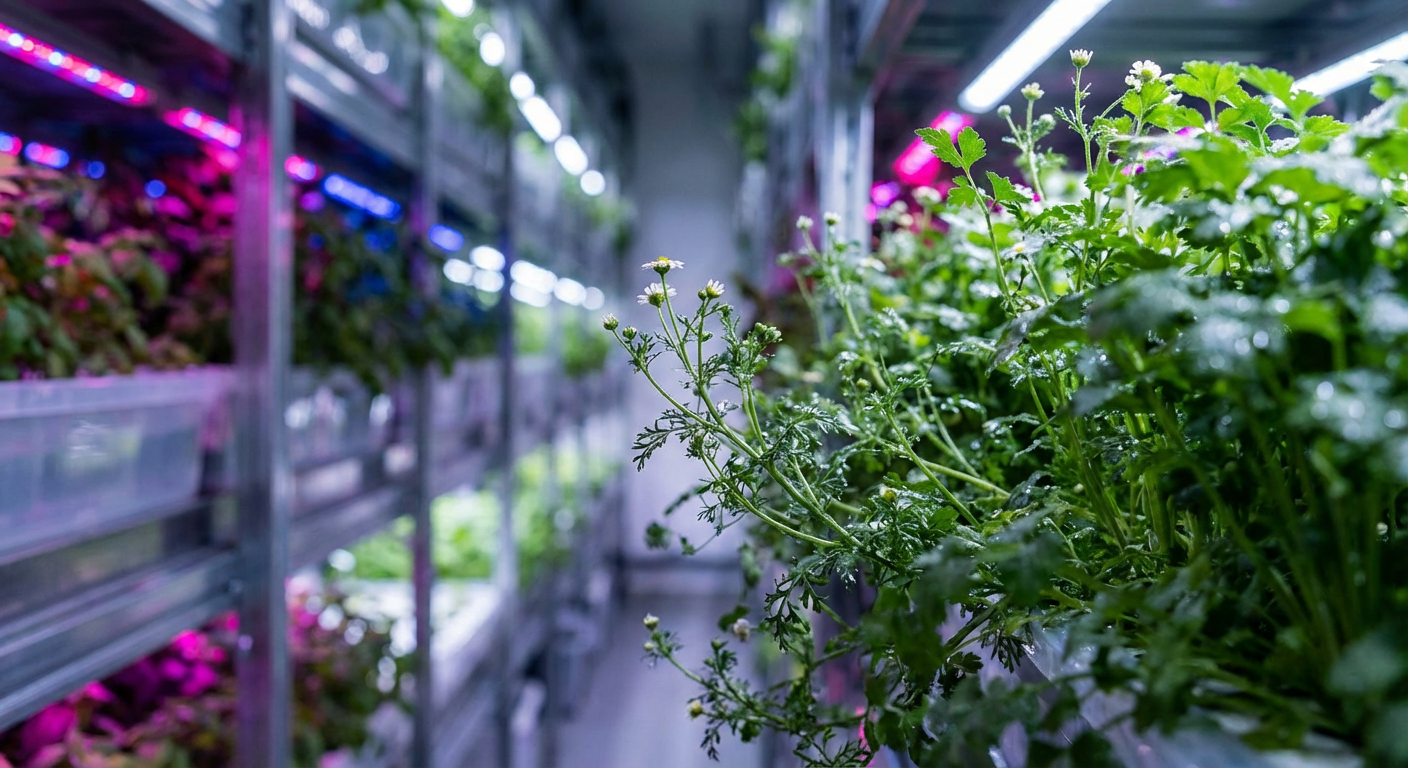
The global supply chain for natural ingredients faces challenges, particularly with tropical botanicals impacted by regulations like EUDR, which could render 35-55% of tropical supply non-compliant by 2027. Vertical farming of Artemisia offers a reliable and compliant alternative. Our internal R&D has shown Artemisia annua yields artemisinin at 6270 mg/kg, approximately 9 times higher than field-grown sources according to independent analysis, CTAEX lab, 2025.
Consistent Potency: Proprietary abiotic/biotic stress protocols (UV-B, drought, MeJA, salinity, elicitors) can upregulate secondary metabolites in Artemisia. This results is in higher potency and batch-to-batch consistency compared to field-grown sources.
Pharma-Grade Cleanliness: Vertical farming ensures pharmaceutical-grade microbial cleanliness, zero pesticides, and full European traceability, critical for high-value cosmetic and nutraceutical applications.
These advantages position vertically farmed Artemisia as a premium ingredient for anti-dandruff applications. Integrating this ingredient can also build supply chain resilience. For formulators evaluating artemisia annua for hair, the ingredient's potential extends beyond dandruff to other forms of scalp and hair care.
Consumer Trends and Product Positioning
The demand for natural, effective, and sustainably sourced ingredients is a significant market tailwind. Products featuring Artemisia can be positioned to capture this demand.
Natural Alternative: Market Artemisia-based shampoos as eco-friendly, natural alternatives to synthetic actives like zinc pyrithione or ketoconazole.
Multi-Benefit Claims: Leverage Artemisia's potential anti-inflammatory and antioxidant properties for broader scalp health claims beyond just anti-dandruff. For example, a formulation aimed at how to formulate a scalp serum could integrate these benefits.
Premiumization: The controlled cultivation and enhanced potency of vertical-farmed Artemisia justify its positioning in luxury and high-performance hair care segments.
This strategic positioning can differentiate products in a competitive market while addressing critical consumer and regulatory demands. For consumers seeking a ketoconazole alternative, Artemisia offers a compelling natural ingredient choice.
Frequently Asked Questions
Is there clinical trial evidence supporting Artemisia for dandruff?
Robust clinical trial evidence for Artemisia in dandruff treatment is currently limited. Most existing data are from in vitro studies or traditional applications, with patents indicating its inclusion in formulations based on perceived benefits.
How effective is Artemisia compared to zinc pyrithione or ketoconazole?
There is presently no direct clinical data comparing the efficacy of Artemisia extracts to established anti-dandruff actives such as zinc pyrithione or ketoconazole. Research is needed to establish a comparative effectiveness profile.
What concentrations of Artemisia extract are used in patented shampoo formulations?
Specific concentrations of Artemisia extract in patented shampoo formulations are often proprietary and not explicitly disclosed, though some patents hint at unspecified extract percentages (e.g., 10–20% in formulation) at the ingredient level rather than active compound level.
Are there safety assessments or regulatory approvals for Artemisia in shampoos?
Formal safety assessments or specific regulatory approvals from bodies like EFSA, FDA, or EMA for Artemisia extracts specifically used in anti-dandruff shampoos are not readily available in public databases. General safety for rinse-off products is anticipated, but comprehensive evaluations are pending.
Which extraction methods maximize antifungal compounds from Artemisia?
Optimal extraction methods for maximizing antifungal compounds from Artemisia often involve solvent-based techniques (e.g., ethanol, methanol, supercritical CO₂) designed to isolate specific metabolites like artemisinin and terpenes. The exact method depends on the target compound profile.
Can Artemisia be combined with other antifungal botanicals for synergistic effect?
Yes, Artemisia can be combined with other antifungal botanicals to achieve synergistic effects, as demonstrated in some patent applications that feature multi-herb blends. This approach can broaden the spectrum of activity and potentially lower individual ingredient concentrations.
What formulation technologies (e.g., microemulsion, nanomicelles) enhance Artemisia delivery?
Microemulsions and nanomicellar systems are advanced formulation technologies that can enhance Artemisia delivery by improving solubility, stability, skin penetration, and bioavailability on the scalp. These technologies lead to more effective and aesthetically pleasing products.
What is the market potential for natural, Artemisia-based anti-dandruff products?
The market potential for natural, Artemisia-based anti-dandruff products is significant, driven by consumer demand for natural ingredients, sustainability trends, and the need for reliable supply chains. Vertically farmed Artemisia offers consistent potency and purity, ideal for this segment.
Are there known contraindications or sensitization risks with Artemisia scalp use?
While Artemisia has a history of traditional use, comprehensive clinical data on contraindications or sensitization risks specifically for scalp applications are limited. Potential for skin sensitivity or allergic reactions is possible, warranting patch testing and further clinical evaluation. The market for natural anti-dandruff solutions is expanding, driven by consumer preference and supply chain vulnerabilities. While Artemisia shows promise from in vitro and patent research, comprehensive clinical validation and clear regulatory guidelines are crucial for its widespread adoption. Vertical farming ensures a high-quality, traceable, and potent supply capable of meeting these burgeoning industry demands. Contact Supernormal Greens to request samples and specifications.