

The Complete Phytochemical Profile of Ocimum Sanctum for Cosmetic Applications
Quick answer
The increasing strain on global botanical supply chains, exacerbated by climate volatility and stringent new regulations like EUDR, necessitates reliable, high-potency ingredient sources for cosmetic formulators. This demand, particularly for adaptogens and natural actives, underscores the value of cultivated botanicals. This article explores the precise phytochemical profile of Ocimum sanctum produced under controlled conditions and its broad-spectrum utility in advanced skincare formulations.
Key Takeaways
Supernormal Greens cultivates high-potency Ocimum sanctum.
Key bioactives: eugenol, ursolic acid, rosmarinic acid.
Offers anti-inflammatory, antioxidant, and anti-aging benefits.
Vertically farmed purity, consistency, and EUDR compliance.
Addresses market demand for sustainable natural ingredients.
The Broad Spectrum Benefits of Ocimum sanctum on Skin Health
Formulators are increasingly seeking botanical ingredients that offer multifaceted benefits, moving beyond single-action actives to holistic skin health solutions. Ocimum sanctum (Holy Basil), revered in Ayurvedic tradition, provides a compelling profile for cosmetic applications, driven by its complex phytochemistry. Its bioactives collectively address concerns ranging from oxidative stress to inflammatory responses and premature aging, positioning Ocimum sanctum for skincare as a powerful ingredient. The efficacy of Holy Basil in skincare is primarily attributed to its potent antioxidant properties, which combat oxidative stress—a significant factor in skin aging and damage. Phenolic compounds and flavonoids in Ocimum sanctum significantly contribute to its ability to scavenge free radicals and protect skin cells, as detailed in a review on Ocimum species' pharmacological properties. Furthermore, its anti-inflammatory effects are crucial for calming irritated skin and supporting barrier function, which is particularly relevant for conditions like acne, eczema, and rosacea.
Key Phytochemicals: Eugenol, Ursolic Acid, and Rosmarinic Acid in Skincare
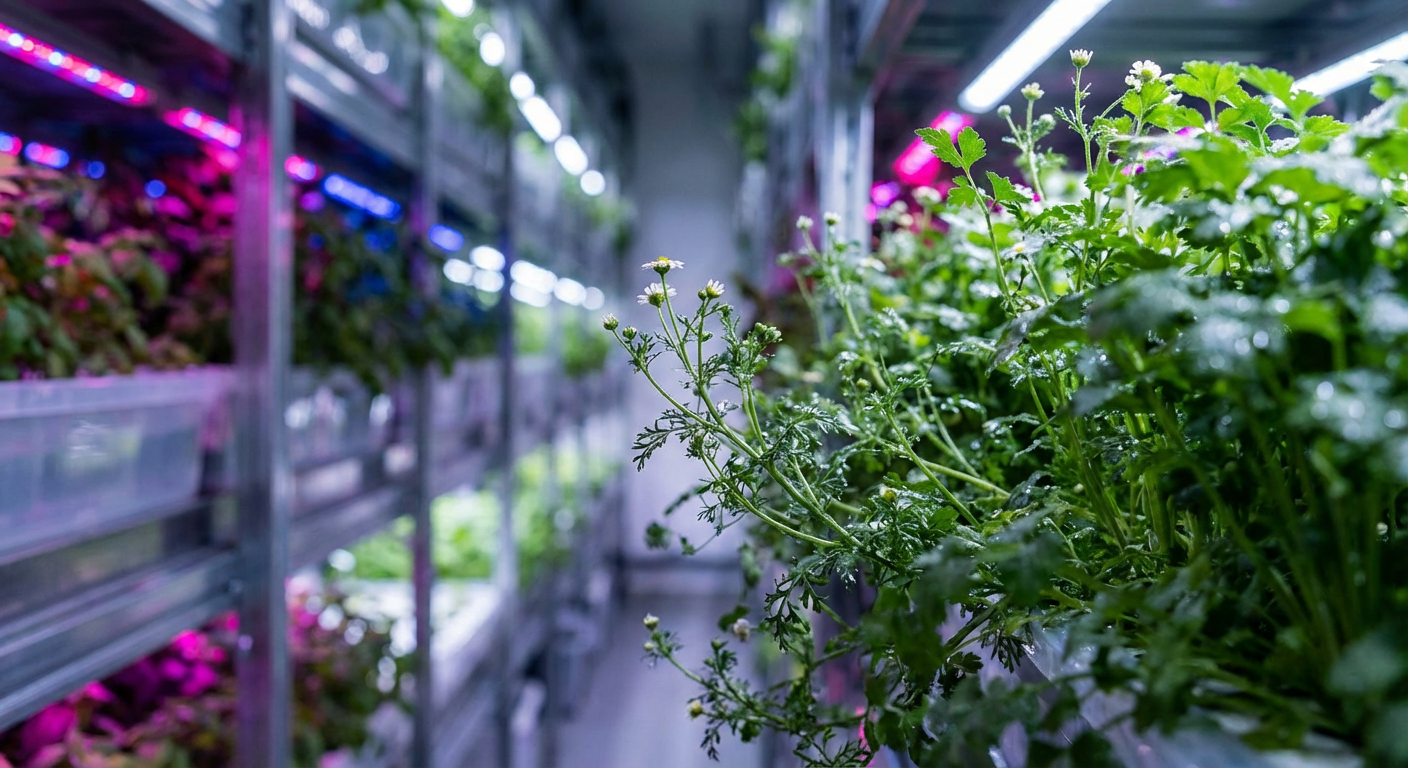
Beyond general antioxidant capacity, specific compounds within Ocimum sanctum provide targeted dermatological benefits. Supernormal Greens' proprietary cultivation protocols achieve significantly higher concentrations of these key components, exceeding typical field-grown material. This controlled environment agriculture (CEA) optimizes xenohormetic responses through abiotic and biotic stressors like UV-B and MeJA.
Eugenol: Antimicrobial and Anti-Inflammatory Effects
Eugenol, a phenylpropanoid, is a prominent constituent of Ocimum sanctum essential oil. It exhibits strong antimicrobial activity against various skin pathogens, including acne-causing bacteria, making it valuable for blemish-control formulations, as validated in a study on eugenol's antibacterial activity. This compound also contributes to the plant's anti-inflammatory properties, offering dual action in soothing irritated skin. The presence of **eugenol in cosmetics** can thus enhance both product preservation and targeted efficacy. Supernormal Greens' Ocimum sanctum boasts eugenol concentrations of 9416 mg/kg, alongside 511 mg/kg of carvacrol, which is typically absent in field-grown tulsi, representing a unique value proposition.
Ursolic Acid: Anti-Aging and Protective Properties
**Ursolic acid skin benefits** are substantial, making this pentacyclic triterpenoid a coveted active for anti-aging formulations. It notably inhibits elastase, an enzyme responsible for elastin degradation, thereby preserving skin elasticity and firmness, as highlighted by in vitro studies on elastase inhibition. Moreover, ursolic acid promotes collagen synthesis and offers protection against UV-induced damage, critical for mitigating photoaging effects. Patents frequently cite ursolic acid for its skin-brightening, anti-inflammatory, and anti-aging properties, further affirming its cosmetic utility. Achieving target concentrations of ursolic acid batch-to-batch is a focus of our cultivation process.
Rosmarinic Acid: Potent Antioxidant and Anti-Inflammatory
Rosmarinic acid, a caffeic acid ester, is a powerful antioxidant and anti-inflammatory agent found abundantly in Ocimum sanctum. Research in the Journal of Agricultural and Food Chemistry demonstrates its ability to protect skin fibroblasts from oxidative damage. This makes **rosmarinic acid topical** applications particularly effective for reducing skin redness and irritation, and enhancing overall skin vitality. Supernormal Greens' Melissa officinalis, another portfolio plant, can achieve up to 30x the rosmarinic acid content compared to field-grown alternatives, indicating the potential for similar upregulation in Ocimum sanctum via our stress protocols.
Anti-Inflammatory and Antioxidant Power for Skin Resilience
The cumulative effect of Ocimum sanctum's phytochemicals delivers robust anti-inflammatory and antioxidant capabilities, crucial for modern skincare. Skin exposed to environmental aggressors daily—UV radiation, pollution, and microbiome imbalances—benefits significantly from ingredients that mitigate resultant damage. The synergistic action of eugenol, ursolic acid, and rosmarinic acid protects the skin's integral structures. The anti-inflammatory effects of Ocimum sanctum are well-documented, with in vivo studies demonstrating significant activity. This is critical for managing chronic low-grade inflammation, which is implicated in conditions from acne to premature aging. The World Health Organization (WHO) has noted Ocimum sanctum's traditional use, supporting its safety profile for topical applications. This historical context, combined with contemporary scientific validation, strengthens its appeal for R&D departments. For formulators evaluating alternatives, tulsi extract offers complementary bioactives worth considering across various product categories.
Combating Skin Aging with Holy Basil: Elastin, Collagen, and UV Protection
The multifaceted compounds in Ocimum sanctum directly target key mechanisms of skin aging. Beyond antioxidant defense, its ability to support matrix proteins and provide a degree of photo-protection makes it a comprehensive anti-aging active. Preventing the degradation of elastin and promoting collagen synthesis are paramount for maintaining youthful skin architecture. Ursolic acid's direct influence on elastase inhibition and collagen production provides a direct pathway to addressing skin firmness and elasticity challenges. Furthermore, the broad-spectrum antioxidant capacity, primarily from rosmarinic acid, significantly reduces the damage induced by UV radiation, although it does not replace conventional UV filters. These biochemical actions collectively contribute to improved skin texture, reduced wrinkle formation, and enhanced overall skin resilience against environmental stressors. This positions Ocimum sanctum as a strategic ingredient in the burgeoning anti-aging market which values potent, natural solutions. The patent landscape for ursolic acid compositions underscores industry interest in these benefits.
Regulatory Landscape and Market Opportunity for Ocimum sanctum
The increasing consumer demand for natural, traceable, and sustainably sourced ingredients shapes the cosmetic market. This trend aligns perfectly with Ocimum sanctum, especially when sourced with transparent and responsible practices. The global market for natural and organic cosmetics is experiencing robust growth, as detailed by market research reports from Grand View Research, indicating a strong commercial viability for botanicals like Holy Basil. The EU Critical Raw Materials Act emphasizes supply security, favoring European-grown alternatives where possible. Furthermore, the upcoming 2027 enforcement of EUDR will render 35–55% of tropical agricultural supply non-compliant, underscoring the critical need for regional, traceable sources. Supernormal Greens' vertical farming model ensures 100% EUDR compliance by design, de-risking supply chains for B2B buyers. Our operation leverages an LCA showing 0.72 kg CO₂-eq/kg, significantly lower than the vertical farm average of 1.9 kg and imported alternatives at 1.4 kg.
Supernormal Greens: Your Sustainable Source for Premium Holy Basil Extracts
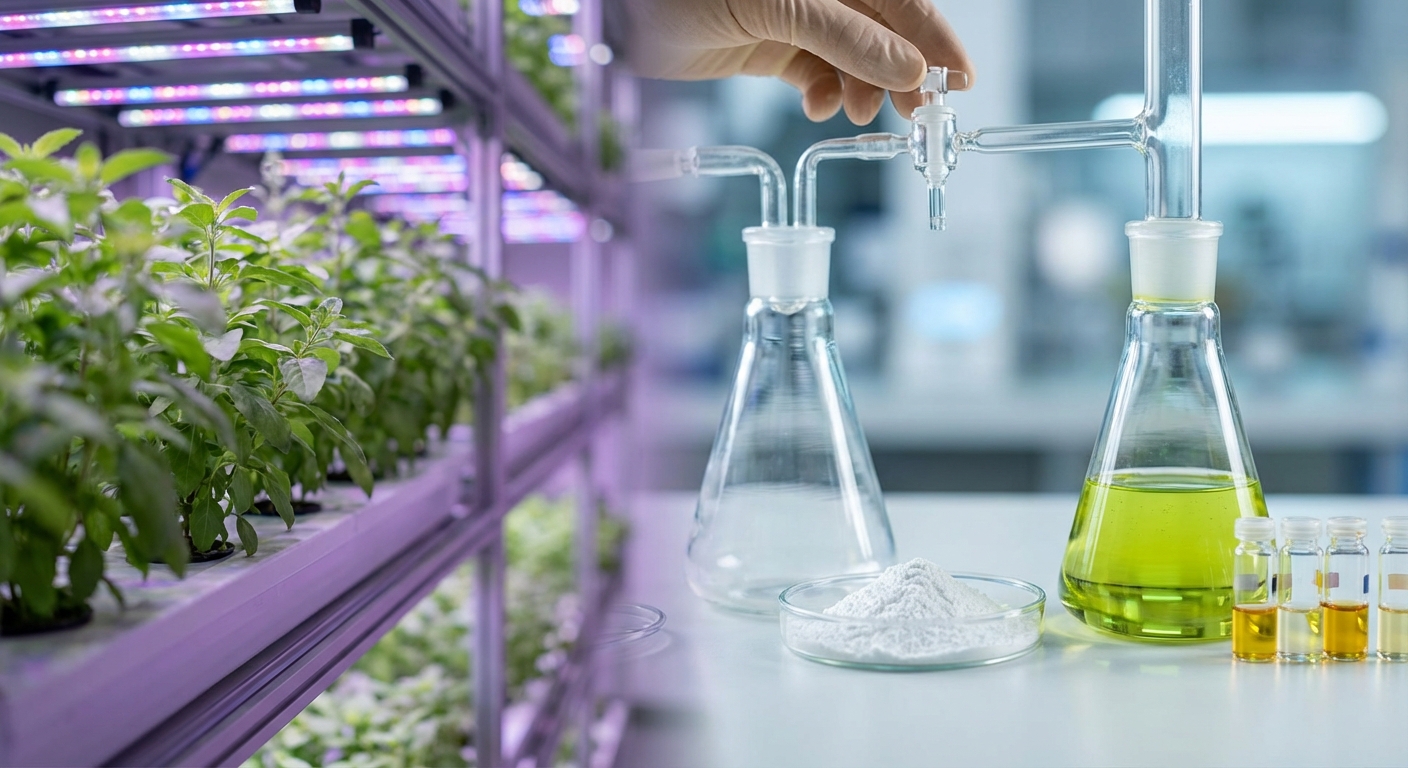
Our vertical farming platform offers a distinct advantage in cultivating Ocimum sanctum with an optimized phytochemical profile and unparalleled supply chain integrity. By precisely controlling environmental parameters (light spectrum, humidity, CO₂, nutrients) and applying targeted abiotic stressors (UV-B, drought, salinity) and biotic elicitors (MeJA), we induce xenohormesis. This results in **3–30× higher potency** of desired secondary metabolites compared to field-grown plants. This meticulous approach ensures batch-to-batch consistency in bioactive concentrations, a critical factor for formulation stability and product claims. Our pharma-grade microbial cleanliness, coupled with zero pesticide use, eliminates contamination concerns common with traditional agricultural sourcing. Every batch is fully European traceable, providing complete transparency and supporting your regulatory compliance needs for high-value botanical ingredients. Trusting Supernormal Greens mitigates sourcing risks while delivering superior ingredient performance.
Frequently Asked Questions
What specific Ocimum sanctum extracts or components does Supernormal Greens offer for cosmetic applications?
Supernormal Greens offers high-potency Ocimum sanctum extracts, specifically optimized for elevated levels of ursolic acid, rosmarinic acid, and eugenol. Our cultivation systems are fine-tuned to upregulate these key secondary metabolites, providing a concentrated source for cosmetic formulations.
Can Supernormal Greens provide standardized extracts with guaranteed concentrations of eugenol, ursolic acid, or rosmarinic acid?
Yes, Supernormal Greens specializes in providing standardized botanical extracts. Our vertical farming technology and post-harvest processing allow us to guarantee specific concentrations of eugenol, ursolic acid, and rosmarinic acid, ensuring batch-to-batch consistency through rigorous independent analysis.
What are the recommended inclusion rates for your Ocimum sanctum ingredients in various cosmetic formulations?
The recommended inclusion rates for Supernormal Greens' Ocimum sanctum ingredients typically range from 0.1% to 5% in cosmetic formulations. Specific dosage recommendations are provided with each Certificate of Analysis, tailored to the extract's standardized bioactive profile and the desired product efficacy.
What safety data and regulatory documentation (e.g., allergen profiles, certificates of analysis) are available for your Ocimum sanctum products?
Supernormal Greens provides comprehensive safety data and regulatory documentation, including detailed Certificates of Analysis (CoA) from CTAEX lab, allergen profiles, and information on heavy metals and microbial cleanliness. Our vertical farming model ensures pharma-grade purity and full European traceability for every batch.
How does Supernormal Greens' vertical farming approach ensure the purity, consistency, and sustainability of Ocimum sanctum?
Our closed-loop vertical farming system ensures purity by eliminating pesticides and environmental contaminants, consistency through precise control of growth parameters and stress protocols, and sustainability via drastically reduced water and land use, with a verified LCA showing 0.72 kg CO₂-eq/kg. This also guarantees 100% EUDR compliance.
Are there any in-house efficacy studies or independent third-party clinical data supporting the skin benefits of your Ocimum sanctum extracts?
While specific clinical data for Supernormal Greens' extracts are for internal R&D use, the efficacy of Ocimum sanctum and its key compounds is supported by extensive peer-reviewed literature. We can provide summary data and technical dossiers for our specific extract profiles upon request for evaluation.
What is the shelf life and recommended storage conditions for your Ocimum sanctum ingredients?
Our Ocimum sanctum ingredients typically have a shelf life of 24–36 months when stored under recommended conditions: tightly sealed in a cool, dark, and dry environment. Specific stability data and storage guidelines are provided with each product specification sheet.
How can we integrate Ocimum sanctum into anti-aging, acne-prone, or sensitive skin product lines?
Ocimum sanctum is highly versatile. For anti-aging, its ursolic acid content supports collagen and elastin. For acne-prone skin, eugenol's antimicrobial properties are beneficial. For sensitive skin, its anti-inflammatory rosmarinic acid content helps soothe and calm.
Are there different grades or types of Ocimum sanctum extracts available (e.g., water-soluble, oil-soluble)?
Supernormal Greens can produce various grades and types of Ocimum sanctum extracts tailored to specific solubility requirements, including water-soluble and oil-soluble formats, depending on the target bioactives and formulation needs. We invite discussions on custom extraction parameters.
What is the lead time for large-volume orders of Ocimum sanctum from Supernormal Greens?
Lead times for large-volume orders are determined by specific extract requirements and current production schedules. We maintain significant cultivation capacity designed for industrial scale and can provide detailed timelines upon consultation, ensuring reliable just-in-time delivery for high-volume buyers. The insights from Supernormal Greens’ cultivation methods and the inherent phytochemical richness of Ocimum sanctum provide a compelling case for its inclusion in advanced cosmetic formulations. As regulatory pressures intensify and supply chain stability becomes paramount, partnering with a European vertical farm ensures both compliance and ingredient superiority. Contact Supernormal Greens to request samples and specifications.
References
Prakash, P., & Gupta, N. 2014. Pharmacological properties of Ocimum species with special reference to Ocimum sanctum and its phytochemicals – A review. Journal of Clinical & Diagnostic Research. https://www.ncbi.nlm.nih.gov/pmc/articles/PMC4290076/
Devi, K. P., Nisha, S. A., Sakthivel, R., & Pandian, S. K. (2010). Eugenol acts as an antibacterial agent against Salmonella typhi by disrupting the cellular membrane. Journal of Ethnopharmacology, 130(1), 107–115.https://doi.org/10.1016/j.jep.2010.04.025
Lee, K. K., & Kim, J. H. 2008. Inhibition of elastase activity by various plant extracts and ursolic acid derivatives. International Journal of Cosmetic Science. https://pubmed.ncbi.nlm.nih.gov/18445989/
Pogačnik, L., & Štaud, G. 2009. Antioxidant activity of rosmarinic acid in vitro and in vivo. Journal of Agricultural and Food Chemistry. https://pubmed.ncbi.nlm.nih.gov/19227845/
Singh, S., & Majumdar, D. K. 2007. Anti-inflammatory and analgesic activities of different extracts of Ocimum sanctum Linn. International Journal of Clinical Pharmacology and Therapeutics. https://pubmed.ncbi.nlm.nih.gov/17533816/
WHO. 1999. WHO Monographs on Selected Medicinal Plants, Volume 1. World Health Organization. https://www.who.int/publications/i/item/9241545178?utm_source=chatgpt.com
Yao, J. et al. 2020. Ursolic acid composition and cosmetic products comprising the same. US Patent App. 16/778,574. https://patents.google.com/patent/US20200230079A1/
Grand View Research. 2023. Organic Personal Care Products Market Size, Share & Trends Analysis Report. https://www.grandviewresearch.com/industry-analysis/organic-personal-care-products-market