

Field-Grown vs. CEA Tulsi: A Data Comparison of Ursolic Acid Variation by Batch

Quick answer
The botanical extract market frequently experiences supply chain inconsistencies, especially with high-value ingredients like Holy Basil (Ocimum sanctum). Factors such as seasonal variations and disparate farming practices directly impact phytochemical profiles. Understanding the degree of potency variation in field-grown tulsi is critical for B2B buyers.
This article examines the drivers of batch-to-batch inconsistency in traditional tulsi cultivation and contrasts it with the controlled environment agriculture (CEA) paradigm.
Key Takeaways
Field-grown tulsi potency shows significant seasonal and edaphic variability.
Methyl eugenol levels can fluctuate from 55% to 77% seasonally.
Harvest timing and plant part affect essential oil yield and composition.
CEA mitigates environmental variation, offering batch-to-batch consistency.
Seasonal Dynamics in Tulsi Phytochemistry
Seasonal fluctuations are a primary driver of chemical variability in field-grown botanicals, including Ocimum sanctum. Environmental factors like temperature, rainfall, and light intensity directly influence plant secondary metabolism.
A 2018 GC-MS study on O. sanctum leaves mapped these dynamics across a full year.
Essential Oil Yield Fluctuations
Essential oil yield in O. sanctum leaves generally varies throughout the year. The study reported yields ranging from 0.14% to 0.21% w/w under field conditions.
Peak yields typically occur during specific growth stages, often linked to distinct seasonal conditions.
Factors influencing yield:
Temperature and light intensity
Precipitation levels
Nutrient availability
Phenological stage (e.g., flowering)
Key Constituent Variations
Beyond overall yield, the composition of individual phytochemicals within the essential oil demonstrates significant seasonal shifts. These variations directly influence the extract's therapeutic and aromatic properties.
Specifically, the 2018 study noted a substantial range in critical compounds:
Methyl Eugenol: Peaked at approximately 76.8% in November, dropping to around 55.5% by April.
Beta-Caryophyllene: Exhibited an inverse trend, reaching peak concentrations around April (~20.32%) and declining to ~7.67% in November.
Such large shifts highlight the challenge in achieving consistent profiles from field harvests.
How much does methyl eugenol content vary across seasons in tulsi?
Methyl eugenol content in field-grown Ocimum sanctum can vary significantly, with reported concentrations ranging from approximately 55.5% to 76.8% depending on the harvest season, as observed in a seasonal GC-MS study.
Edaphic Influences on Medicinal Plant Potency
Soil characteristics play a non-trivial role in modulating the phytochemistry of medicinal plants. The physical and chemical properties of soil directly impact nutrient uptake, water availability, and plant stress responses, which in turn affect secondary metabolite production.
This variability poses a challenge for ingredient buyers seeking consistent botanical extracts.
Impact of Soil Type on Basil Essential Oils
Different soil types provide distinct environments for plant growth. A 2022 study on purple basil (Ocimum basilicum) demonstrated how soil composition profoundly influences essential oil profiles.
The research compared plants grown in clay, loamy sand, and sandy-clay loam soils, revealing differences in both yield and constituent ratios.
Soil Type | Observed Impact on Essential Oil |
|---|---|
Clay | Often associated with higher moisture retention, potentially affecting water-soluble components. |
Loamy Sand | Good drainage but lower nutrient retention, influencing secondary metabolite pathways. |
Sandy-Clay Loam | Balanced properties, but specific mineral availabilities can still alter chemotypes. |
These distinctions for O. basilicum suggest similar edaphic influences on O. sanctum.
Can soil amendments improve essential oil consistency in tulsi crops?
Soil amendments can potentially influence essential oil consistency in tulsi by altering nutrient availability, pH, and microbial activity, which are factors known to affect secondary metabolite production; however, controlling all variables to achieve batch consistency remains complex in open-field settings.
Nutrient Availability and Phytochemical Synthesis
The availability of macro- and micronutrients in the soil directly fuels biosynthetic pathways within plants. Deficiencies or excesses can upregulate or downregulate specific secondary metabolites.
Key soil parameters:
pH levels
Organic matter content
Macronutrient (N, P, K) ratios
Micromineral (Fe, Zn, Mn) concentrations
These parameters are inherently difficult to control uniformly across large-scale field cultivation, contributing to potency variation in field-grown tulsi.
Standardization: From GACP to GMP in Extract Consistency
Achieving batch-to-batch consistency in botanical extracts transitions from Good Agricultural and Collection Practices (GACP) to Good Manufacturing Practices (GMP). This holistic approach addresses variability from raw material sourcing through to final product processing.
However, inherent field variability complicates strict adherence to such standards without advanced cultivation technologies.
The Role of GACP in Minimizing Field Variability
GACP guidelines aim to ensure the quality and safety of medicinal plant raw materials. They cover aspects such as cultivation, harvesting, and initial processing.
GACP considerations for consistency:
Selecting appropriate plant varieties/chemotypes
Controlling planting density and spacing
Optimizing irrigation and fertilization schedules
Implementing precise harvesting protocols
Implementing GMP for Extract Quality
GMP ensures that products are consistently produced and controlled according to quality standards. For botanical extracts, this means defined specifications for active compounds, purity, and safety.
However, when the raw material (field-grown tulsi) itself is variable, achieving GMP-compliant consistency in the final extract becomes challenging.
What standardization methods ensure batch consistency for tulsi extracts?
Standardization methods for tulsi extracts involve spectroscopic or chromatographic techniques (e.g., HPLC, GC-MS) to quantify marker compounds like ursolic acid or specific essential oil constituents, combined with strict GACP for cultivation and GMP for processing to minimize batch variation from source to finished product.
Controlled Environment Agriculture (CEA) as a Standardization Tool
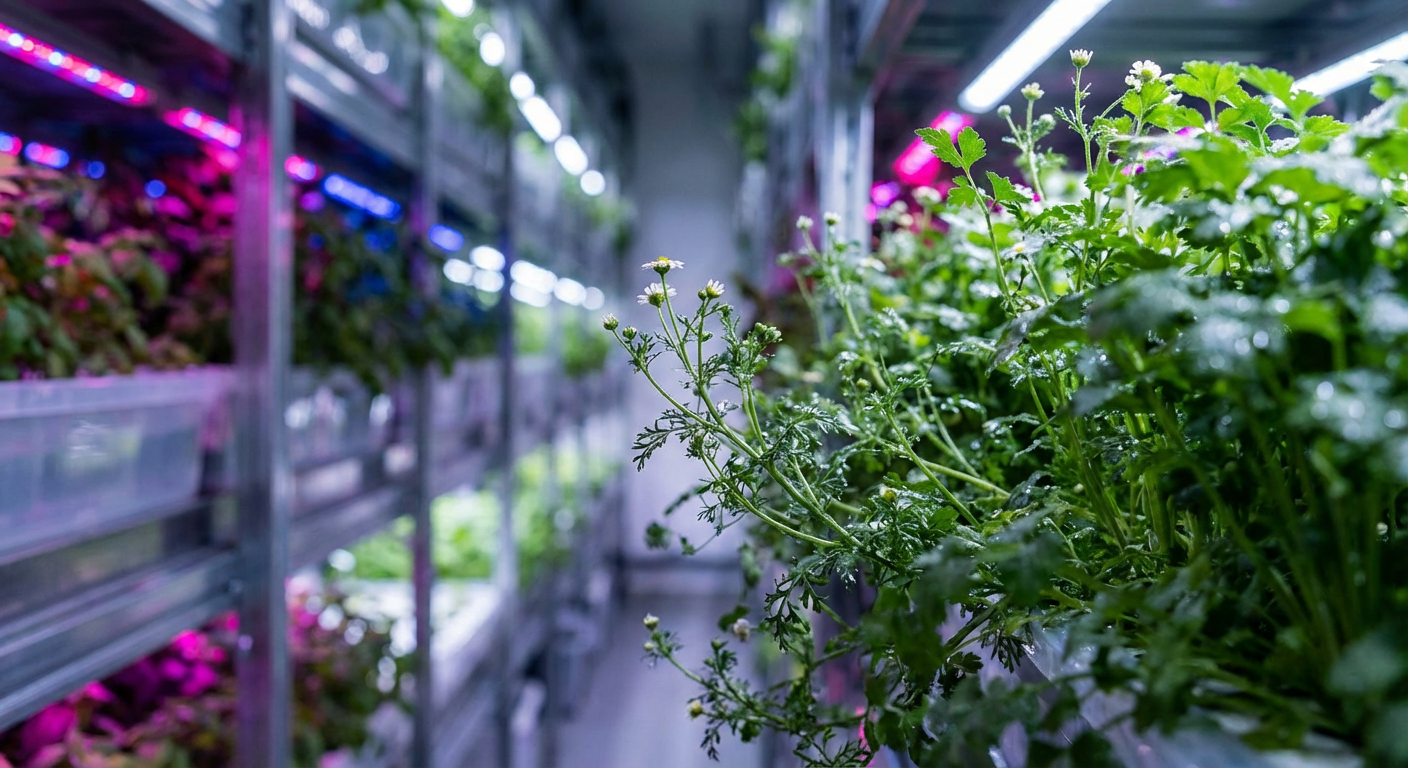
Vertical farming, a form of CEA, offers a solution to mitigate field-based variability. By controlling abiotic and biotic factors, it ensures predictable plant growth and secondary metabolite profiles.
This allows for deliberate elicitation protocols to upregulate target compounds, leading to high-potency, consistent batches.
CEA parameters for consistency:
Precise control over light spectrum and intensity (UV-B elicitation)
Optimized nutrient delivery systems
Stable temperature and humidity
Aseptic conditions preventing microbial contamination
The result is a pharma-grade raw material with superior batch constancy, critical for B2B buyers.
"Controlled environments enable the stabilization of metabolic states by decoupling plants from fluctuating external cues. This allows targeted regulation of secondary metabolite pathways, transforming variability at the molecular level into reproducible phytochemical outputs."
Shirin Moradi, Senior plant scientist, Supernormal greens
Industry Challenges in Botanical Extract Quality
The botanical extract industry faces significant challenges in ensuring consistent quality, largely due to the inherent variability of natural products. These challenges impact product efficacy, regulatory compliance, and market confidence.
Understanding these obstacles is crucial for ingredient buyers making sourcing decisions.
Variability Across Supply Chains
The sourcing of botanical raw materials often involves complex, multi-tiered supply chains. Each stage, from cultivation to drying and transport, introduces potential for variation.
Sources of inconsistency:
Different geographical origins with unique climates
Varied harvesting and post-harvest handling practices
Lack of standardized drying and storage protocols
Adulteration or misidentification, particularly in fragmented markets
Regulatory Hurdles with Inconsistent Profiles
Regulatory bodies increasingly demand evidence of product consistency and safety. This becomes problematic when the natural variation in botanical raw materials leads to unpredictable phytochemical profiles.
For example, the presence and concentration of certain compounds, like methyl eugenol in tulsi, may raise safety concerns if not consistently monitored.
Are there thresholds for potentially harmful constituents like methyl eugenol?
While no universal regulatory maximums exist for methyl eugenol in tulsi herbal preparations, its genotoxic potential often prompts industry-specific limitations or concentration alerts for essential oils, requiring careful monitoring to ensure consumer safety, especially in refined extracts.
Impact on Product Efficacy and Consumer Trust
Inconsistent botanical extracts can lead to variable product performance, undermining brand reputation and consumer trust. Formulators require reliable data on active compound concentrations to ensure their end products meet efficacy claims.
This is especially true for the growing hair loss market, where ingredient inconsistency can affect clinical outcomes and market perception.
Consequences of inconsistency:
Reduced or unpredictable bioactivity
Challenges in dose-response relationships
Increased quality control costs
Loss of market share due to unreliable products
The EU Critical Raw Materials Act also highlights the need for reliable, consistently potent domestic supply chains.
Geographic Variation and Tulsi Bioactivity
Regional differences in growing conditions significantly influence the chemical composition of Ocimum sanctum, leading to diverse chemotypes and varied bioactivities. This geographic variability is a critical consideration for manufacturers aiming for consistent product efficacy.
Environmental Influence on Chemotype Expression
The climate, altitude, and even local agricultural practices of a specific geographic region can dictate which secondary metabolites are predominantly expressed in Ocimum species. These environmental factors act as natural elicitors, modifying gene expression for various biosynthetic pathways.
A study on Ocimum species grown in Western India, for instance, documented variations in essential oil composition linked to regional environmental conditions.
What bioactivities correlate with seasonal chemical shifts?
Seasonal chemical shifts in tulsi, particularly in essential oil composition, correlate with varying bioactivities such as antioxidant, antimicrobial, and cytotoxic properties, as the proportions of compounds like methyl eugenol and β-caryophyllene influence the overall biological effect of the extract.
How can vertical farming mitigate field‑based variability in potency?
Vertical farming mitigates field-based variability by providing precise, continuous control over environmental parameters (light, temperature, nutrients, CO2), allowing for consistent elicitation and optimized biosynthesis of target compounds across every batch, irrespective of external seasonal changes.
This intrinsic control offered by vertical farming stands in stark contrast to the challenges observed in open-field cultivation, where factors like water usage in vertical farming vs traditional agriculture also present a stark difference.
Tailored Processing for Different Ocimum Chemotypes
The existence of various Ocimum chemotypes, distinguished by their predominant essential oil constituents (e.g., eugenol-rich vs. methyl eugenol-rich), necessitates tailored processing methods. A generic extraction protocol may not optimally capture or preserve the desired phytochemical profile of a specific chemotype.
This is vital for sectors such as natural fragrance, currently facing severe supply shortages for tropical derivatives, where consistent chemotype-specific extracts command significant premiums.
Processing considerations per chemotype:
Solvent selection for optimal extraction efficiency
Extraction temperature and pressure
Downstream purification methods to concentrate target compounds
Storage conditions to preserve chemical stability
Matching processing to chemotype is essential for maximizing yield and maintaining the integrity of the desired bioactive profile, thereby directly impacting the market value and functional application of the extract.
Frequently Asked Questions
How much does methyl eugenol content vary across seasons in tulsi?
Methyl eugenol content in field-grown Ocimum sanctum can fluctuate significantly, with reported levels ranging from approximately 55.5% to 76.8% (w/w) over a year, depending on the harvest season, peaking in autumn/winter and declining in spring.
Can soil amendments improve essential oil consistency in tulsi crops?
While soil amendments can influence nutrient availability and soil structure, thereby affecting essential oil yield and composition, achieving consistent batch-to-batch profiles solely through soil management in open fields remains highly challenging due to uncontrolled environmental variables.
When is optimal harvest time to maximize bioactive oil yield?
Optimal harvest time to maximize bioactive oil yield in Ocimum sanctum is typically during the flowering stage, as studies have shown that flower oil content (~0.4% w/w) is generally higher than that from the whole herb (~0.1-0.25% w/w).
How do leaf vs flower harvests affect chemical profiles and market value?
Harvesting strategies distinguish chemical profiles; flower harvests generally yield higher essential oil content and distinct compositions compared to leaf harvests, often leading to a higher market value for flower-derived extracts due to their concentrated phytochemicals and specific aromatic qualities.
What standardization methods ensure batch consistency for tulsi extracts?
Batch consistency for tulsi extracts is ensured through a combination of GACP during cultivation (e.g., unified genetics, controlled environment) and GMP during processing, utilizing analytical methods like HPLC or GC-MS to quantify marker compounds and ensure consistent phytochemical profiles.
Are there thresholds for potentially harmful constituents like methyl eugenol?
Yes, while specific regulatory thresholds for methyl eugenol in tulsi extracts vary by jurisdiction and end application, its genotoxic potential often leads formulators and regulatory bodies to impose internal limits or require rigorous monitoring to ensure product safety, especially for high-concentration extracts.
How can vertical farming mitigate field‑based variability in potency?
Vertical farming mitigates field-based variability by enabling precise, consistent control over all growth parameters, including light spectrum, temperature, humidity, CO2 levels, and nutrient delivery, thereby stabilizing secondary metabolite production and ensuring batch-to-batch potency and purity.
Do different Ocimum chemotypes require tailored processing for cosmetics/nutraceuticals?
Yes, different Ocimum chemotypes, characterized by dominant compounds like eugenol or methyl eugenol, require tailored extraction and purification protocols to optimally capture and concentrate their specific bioactive profiles for cosmetic or nutraceutical applications, thus maximizing their functional value.
What bioactivities correlate with seasonal chemical shifts?
Seasonal chemical shifts in Ocimum sanctum's essential oil profile, particularly the varying ratios of methyl eugenol and β-caryophyllene, correlate with observable changes in bioactivities such as antioxidant, antimicrobial, and cytotoxic potentials of the extract.
What regulatory challenges arise from batch‑to‑batch variation in botanical extracts?
Batch-to-batch variation in botanical extracts creates significant regulatory challenges, complicating product registration, substantiation of claims, and compliance with safety standards, as consistent quality assurance and stable phytochemical profiles are increasingly expected.
The inherent variability of field-grown botanicals like Ocimum sanctum presents significant challenges for B2B buyers requiring consistent, high-potency ingredients. Controlled environment agriculture offers a pathway to mitigate these issues, providing stable phytochemical profiles crucial for pharmaceutical, cosmetic, and nutraceutical applications.
Contact Supernormal Greens to request samples and specifications.