

Formulating with Artichoke Extract: A Complete Guide for Cosmetic Chemists
Quick answer
The global natural cosmetic ingredients market is experiencing significant growth, driven by consumer demand for sustainable and effective bioactives. However, securing consistent, high-potency botanical extracts presents ongoing supply chain challenges for formulators.
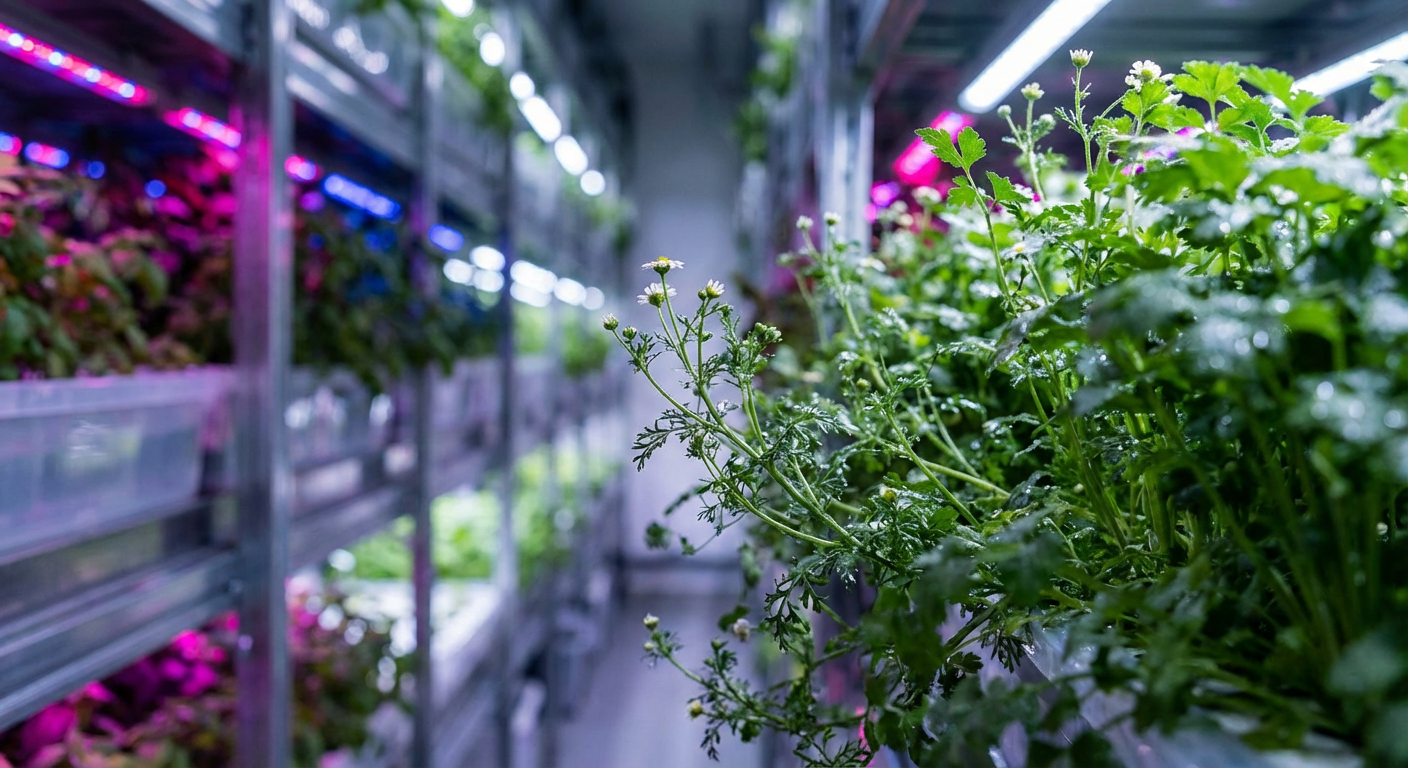
"From a controlled-environment agriculture perspective, the value of artichoke extract begins at cultivation, where metabolite consistency is engineered, not left to environmental variability."
Shirin Moradi, Senior Plant Scientist, Supernormal greens
This guide provides an evidence-led analysis of artichoke (Cynara cardunculus) leaf extract, detailing its mechanisms, clinical signals, and formulation parameters for cosmetic and nutraceutical applications.
Key Takeaways
Artichoke extract offers multi-functional dermal benefits via NF-κB and Nrf2 pathways.
Clinical data supports improvements in skin texture, radiance, and antioxidant capacity.
Standardization by cynaropicrin and caffeoylquinic acids is crucial for efficacy.
Vertical farming provides consistent, high-potency material with full traceability.
What Makes Artichoke Leaf Extract Effective in Skin Care?
Artichoke leaf extract derives its efficacy from a rich profile of bioactive compounds, primarily polyphenols and sesquiterpene lactones. These constituents collectively contribute to antioxidant, anti-inflammatory, and protective effects relevant to skin health. Its mechanism involves modulating cellular pathways associated with aging and environmental stress
Key Bioactive Compounds in Artichoke Leaf Extract
The primary bioactivity is attributed to specific classes of compounds. Understanding these helps in designing effective formulations and setting analytical specifications.
Chlorogenic Acid: A caffeoylquinic acid, potent antioxidant, and UV absorber.
Cynarin: Another isomer of dicaffeoylquinic acid, contributing to antioxidant and hepatoprotective properties.
Cynaropicrin: A sesquiterpene lactone, critical for NF-κB inhibition and anti-photoaging effects.
Luteolin Glucosides: Flavonoids offering additional antioxidant and anti-inflammatory benefits.
These compounds, identified via chromatographic methods, show significant variability in field-grown artichoke, emphasizing the need for standardized sourcing. Commercial and laboratory extracts exhibit wide concentration differences in caffeoylquinic acids and flavonoids, underscoring the importance of HPLC standardization for consistent quality.
Clinical Signals: Texture, Radiance and Antioxidant Outcomes in 28 Days
Clinical research supports the topical application of artichoke leaf extract for improving several key skin parameters over a short timeframe. These outcomes are attributable to its multi-targeted biological activities.
A recent randomized, split-face, double-blind clinical study involving 22 women demonstrated significant improvements.
Topical application of 1.5% Cynara scolymus leaf extract cream for 28 days showed measurable benefits.
Outcomes of Topical Artichoke Leaf Extract (28-day study)
Skin Parameter | Observed Change | Metric |
|---|---|---|
Wrinkle Depth | −5.2% reduction | Profilometry |
Skin Roughness | −7.0% reduction | Profilometry |
Skin Radiance | +19.0% increase | Instrumental assessment |
Antioxidant Capacity (FRAP) | +20.2% increase | Biochemical assay |
TNF-α (Inflammatory marker) | −8.2% reduction | Biochemical assay |
These findings indicate the potential of artichoke leaf extract to address multiple signs of photoaging and inflammation. Another human volunteer study utilizing a 0.002% polyphenolic artichoke extract cream demonstrated improvements in skin elasticity (+11.45%) and roughness (−19.74%) over 28 days, linked to microvascular and tight-junction support.
Mechanisms: From Cynaropicrin to NF‑κB and Nrf2
The efficacy of Cynara cardunculus leaf extract in skincare stems from its action on crucial cellular signaling pathways. These pathways regulate inflammatory responses, oxidative stress, and cellular regeneration.
Chief among these mechanisms is the inhibition of NF-κB and activation of the Nrf2 pathway.
These actions position artichoke extract as a potent ingredient against photoaging and other environmental insults.
Key Molecular Mechanisms
The specific bioactives in artichoke leaves engage distinct molecular targets. A mechanistic study published in Bioorganic & Medicinal Chemistry Letters highlighted the role of cynaropicrin.
NF-κB Inhibition: Cynaropicrin suppresses the transcription activity of nuclear factor-kappa B (NF-κB). This pathway is central to inflammation and photoaging.
AhR–Nrf2–NQO1 Activation: Cynaropicrin also activates the Aryl hydrocarbon Receptor (AhR)-Nrf2-NQO1 axis. This cascade enhances internal antioxidant defenses within keratinocytes.
UVB Oxidative Stress Attenuation: By activating Nrf2, cynaropicrin helps mitigate oxidative stress induced by UVB radiation, preventing cellular damage.
These mechanisms have been demonstrated in both in vitro keratinocyte models and in vivo photoaging models, providing a strong scientific basis for anti-aging and photoprotective claims. Commercially, this has been leveraged for photoaging and pore appearance claims.
Formulation Playbook: Solubility, pH, Formats and Synergies
Successful incorporation of artichoke (Cynara cardunculus) leaf extract into cosmetic formulations requires careful consideration of its physiochemical properties and potential interactions. Optimizing solubility, pH, and identifying synergistic actives are key for developing stable and effective products.
Solubility and Recommended Inclusion Rates
Artichoke leaf extracts are typically supplied as water-soluble powders, which simplifies their integration into aqueous phases of cosmetic products. Supplier TDS reports often indicate optimal conditions.
Solubility: Water and glycol dispersible; typically insoluble in oils.
Recommended Use Level (powdered extract): 0.5–2% in the water phase.
Processing Temperature: Optimal dissolution often occurs at 45–60°C.
For specific proprietary extracts, like Ichimaru Pharcos' Biobenefity, a 1% blending amount is frequently recommended for desired effects. This ensures sufficient concentration of key bioactives without impacting formulation stability.
Compatibility and Synergistic Actives
Understanding compatibility helps prevent degradation and maximize efficacy. The extract maintains antioxidant and photoprotective activity in various formats after incorporation.
pH Range: Generally stable in typical cosmetic pH ranges (4.0-7.0). Extreme pHs should be avoided to prevent degradation of phenolic compounds.
Incompatibilities: High concentrations of metal ions may cause color shifts due to phenolic complexation; chelating agents can mitigate this.
Synergies: A European patent by Procter & Gamble highlights synergistic effects when Cynara cardunculus extract (0.0001–15% w/w) is combined with niacinamide for anti-aging via NF-κB inhibition. This combination can broaden the active's utility.
Stability has been confirmed in O/W emulsions and hydrogels, where the extract retains its antioxidant and photoprotective activity, ensuring shelf-life integrity.
Quality & Standardization: Designing a Phenolic/Cynaropicrin Spec
Ensuring the efficacy and consistency of artichoke (Cynara cardunculus) extract relies heavily on robust quality control and standardization protocols. A comprehensive specification should target key bioactive markers.
The variability in field-grown artichoke demands precise analytical methods.
Defining specific markers like cynaropicrin and caffeoylquinic acids is paramount for batch-to-batch consistency.
Key Markers for Standardization
Standardization should focus on the compounds responsible for the extract's primary biological activities. These include sesquiterpene lactones and phenolic acids.
Cynaropicrin: A sesquiterpene lactone crucial for NF-κB inhibition and anti-photoaging, making it a primary efficacy marker.
Chlorogenic Acid: A caffeoylquinic acid with significant antioxidant properties.
Cynarin: Another key dicaffeoylquinic acid, contributing to overall phenolic content.
Total Phenolic Content (TPC): A broader measure, often quantified by Folin-Ciocalteu, providing an overview of antioxidant capacity.
Analytical surveys of commercial artichoke extracts have revealed considerable variability in their caffeoylquinic acid and flavonoid profiles, emphasizing the need for rigorous HPLC-based standardization [9, 11].
Analytical Methods and Requirements for Supernormal Greens
Supernormal Greens utilizes advanced analytical techniques to guarantee the potency and purity of its Cynara cardunculus extracts. This ensures consistent quality for B2B buyers.
All extracts are analyzed by independent laboratories, providing unbiased data.
Ljusgårda AB / CTAEX Laboratory performs these analyses to ensure compliance with strict specifications.
HPLC-DAD for Marker Quantification: High-Performance Liquid Chromatography with Diode Array Detection is used for precise quantification of cynaropicrin, chlorogenic acid, and cynarin. This method offers high specificity and sensitivity.
Residual Solvent Analysis: Ensures no harmful solvents remain from the extraction process (GC-HS/MS).
Heavy Metals Screening: ICP-MS ensures compliance with global regulatory limits.
Microbial Purity: Extensive testing for total plate count, yeast, mold, and specific pathogens (e.g., E. coli, Salmonella).
Supernormal Greens guarantees that its extract contains a high concentration of bioactive secondary metabolites, ensuring consistent quality and functional efficacy. Vertical farm cultivation also limits exogenous contaminants such as pesticides or heavy metals often found in field-grown botanicals.
Oral–Topical Integration: Beauty-From-Within Opportunities
The comprehensive biological activity of artichoke (Cynara cardunculus) extract presents a compelling case for integrating oral and topical delivery systems. This synergistic approach maximizes aesthetic and wellness benefits through beauty-from-within strategies.
Oral consumption can complement topical application by addressing systemic factors that influence skin health.
This dual approach aligns with growing consumer interest in holistic beauty solutions.
Oral Indications and Dosage Guidance
The European Medicines Agency (EMA) has recognized the traditional use of artichoke leaf for digestive support. This recognition provides a basis for nutraceutical applications.
Traditional Use: Recognized by the EMA's HMPC monograph for dyspeptic symptoms and enhancing bile flow.
Lipid Management: Systemic reviews and meta-analyses indicate moderate reductions in total cholesterol, LDL-C, and triglycerides with artichoke preparations [12, 13].
EMA Recommended Oral Dosages:
Dry extracts of fresh leaves (DER 15–35:1): 600–2700 mg/day.
Soft extracts: 1800 mg/day.
These oral dosages align with beauty-from-within concepts targeting overall cellular health and lipid profiles, which indirectly influence skin appearance and vitality.
Synergistic Benefits for Skin Health
Combining oral and topical routes can amplify the benefits for skin, leveraging both systemic and localized effects. This integrated approach can target multiple pathways involved in skin aging and overall skin quality.
Systemic Antioxidant Support: Oral intake boosts internal antioxidant defenses, counteracting oxidative stress from within.
Inflammation Modulation: Both oral and topical applications can help modulate inflammatory pathways relevant to skin conditions.
Microcirculation Enhancement: Oral benefits for vascular health can positively impact dermal microcirculation, complementing topical effects for improved skin tone and nutrient delivery.
Supernormal Greens can provide guidance on standardized extracts and dosage, supporting beauty-from-within SKUs with material standardized for key bioactive compounds.
Safety & Regulatory: EMA, EFSA, MoCRA and EUDR at a Glance
Navigating the regulatory landscape for botanical ingredients like artichoke (Cynara cardunculus) extract is critical for market access and consumer safety. Understanding key regulations in Europe and the US helps ensure compliance for cosmetic and nutraceutical applications.
European Regulatory Framework
For the European market, several regulations and organizations govern botanical ingredients. These provide guidance on use, safety, and claims.
Cosmetic Ingredient Status: Cynara scolymus (Artichoke) Leaf Extract is recognized as a cosmetic ingredient in Europe. Its listed functions include skin conditioning and antioxidant properties.
EMA HMPC Monograph: The European Medicines Agency's Committee on Herbal Medicinal Products (HMPC) provides a monograph outlining the traditional use of artichoke leaf for oral applications. This includes defined dosages and contraindications.
EFSA Compendium of Botanicals: The European Food Safety Authority (EFSA) maintains a Compendium of Botanicals. This tool helps assess potential risks from botanicals containing naturally occurring substances of concern. It is a risk-screening tool, not an approval list.
EU Deforestation Regulation (EUDR): The EUDR (Regulation (EU) 2023/1115) focuses on seven commodities and their derivatives. Artichoke is not on this list, significantly simplifying due-diligence requirements compared to other botanicals.
US Regulatory Landscape (MoCRA)
In the United States, the Modernization of Cosmetics Regulation Act (MoCRA) has introduced new requirements for cosmetic products.
Facility and Product Listing: MoCRA mandates that cosmetic product facilities register with the FDA and list their products, including ingredients.
Safety Substantiation: Cosmetic products must have adequate safety substantiation, requiring robust data packages for ingredients.
Positioning & Claims: Pores, Photoaging and Exposome Care
Artichoke (Cynara cardunculus) extract offers a versatile ingredient profile for targeted cosmetic positioning and claims, primarily addressing skin concerns related to photoaging, textural irregularities, and environmental damage. Its mechanistic backing supports claims across the exposome paradigm.
Targeted Claims and Substantiation
Formulations incorporating artichoke extract can leverage specific clinical and mechanistic data for compelling product claims. These claims focus on visibly improving skin appearance.
Photoaging Protection: Based on cynaropicrin’s ability to inhibit NF-κB and activate Nrf2, formulations can claim protection against UV-induced damage and signs of photoaging.
Pore Appearance: Clinical data suggesting improvements in skin roughness and elasticity, coupled with mechanistic support for microvascular and tight-junction integrity, can underpin claims related to refining skin texture and reducing the appearance of pores.
Radiance and Skin Tone: Observed increases in skin radiance and antioxidant capacity in human studies support claims for a brighter, more even complexion.
Antioxidant Efficacy: High levels of chlorogenic acid and other polyphenols substantiate claims for strong antioxidant defence, combating free radical damage.
Integrating these claims helps develop products that resonate with consumer demand for scientifically-backed, performance-driven skincare.
Exposome Care and Holistic Positioning
The artichoke extract's diverse mechanisms make it suitable for formulations positioning themselves around exposome care. This holistic approach addresses internal and external aggressors.
Environmental Stress Defense: By boosting endogenous antioxidant enzymes (Nrf2 pathway), the extract helps skin adapt to and recover from environmental stressors like pollution and UV radiation.
Anti-Inflammaging: Modulation of NF-κB reduces chronic low-grade inflammation, a key driver of aging processes. This supports claims for overall skin health and resilience.
Youthful Appearance: Collectively, these benefits translate to claims for maintaining youthful skin structure, reducing visible signs of aging, and enhancing skin vitality.
This broad spectrum of benefits positions artichoke extract as a multi-functional active for modern skincare formulations.
Frequently Asked Questions
Which topical formats (serum, O/W cream, hydrogel) have you stability-tested with your extract?
Our Cynara cardunculus extract has demonstrated stability and retained its antioxidant and photoprotective activity in oil-in-water (O/W) emulsions and hydrogels. This indicates its versatility for incorporation into various aqueous-based topical formats.
What is the recommended inclusion rate by format and how does it impact viscosity, color, and odor?
A recommended inclusion rate for the powdered extract is 0.5–2% (w/w) in the water phase. At these concentrations, the extract typically causes minor to no noticeable impact on finished product viscosity, imparts a light yellow to amber color depending on concentration, and has a characteristic faint botanical odor that is usually easily masked.
Do you have in vitro data on NF‑κB or Nrf2 and can we reference it in claims substantiation?
Yes, preclinical data details cynaropicrin's capacity to inhibit NF‑κB transactivation and activate the AhR–Nrf2–NQO1 pathway, attenuating UVB oxidative stress in keratinocytes. This data is available to support mechanistic claims substantiation.
Is there clinical evidence specific to pores, radiance or wrinkle reduction we can cite on-pack?
Clinical studies have shown that topical artichoke leaf extract can reduce wrinkle depth and roughness, increase skin radiance, and improve elasticity . These outcomes directly support on-pack claims for improving skin texture, minimizing pores, and enhancing luminosity.
How does your vertical-farm sourcing reduce contaminants and batch-to-batch variability?
Our proprietary vertical farming system eliminates exposure to environmental pollutants and significantly reduces pathogen load, ensuring pharma-grade microbial cleanliness. Controlled abiotic/biotic stress protocols optimize secondary metabolite production, leading to 3–30× higher potency and consistent bioactive profiles batch-to-batch .
What is the allergen risk for Asteraceae-sensitive consumers and how should we label for EU/US markets?
Artichoke (Cynara cardunculus) belongs to the Asteraceae family. Individuals with known allergies to this family (e.g., ragweed, marigolds) may exhibit sensitivity. In the EU, such potential allergens should be listed in the ingredient declaration. For the US, MoCRA requires robust safety substantiation and full ingredient disclosure. We recommend patch testing and clear labeling notes for sensitive individuals based on standard allergen guidelines.
Can you support beauty‑from‑within SKUs with standardized extracts and dosage guidance?
Yes, we can supply standardized Cynara cardunculus extracts suitable for nutraceutical applications. The EMA HMPC monograph provides clear traditional use indications for oral consumption, including dosage guidance for dyspeptic symptoms and lipid support . We can provide the necessary analytical documentation for such product development.
Are there known incompatibilities (e.g., high pH, metal ions) or color shifts over shelf life?
Phenolic compounds in artichoke extract can complex with metal ions, potentially causing color shifts. Use of chelating agents can mitigate this. While generally stable in the typical cosmetic pH range (4.0-7.0), excessively high pH can degrade some phenolic constituents. We recommend stability testing of your specific formulation over shelf life.
What documentation do you provide for MoCRA listing and EU CPSR dossiers?
We provide a comprehensive data package for our Cynara cardunculus extract, including full Certificates of Analysis (CoA), Safety Data Sheets (SDS), detailed technical data sheets (TDS), and specifications for key bioactives. This documentation supports both US MoCRA product listing requirements and the data needs for EU Cosmetic Product Safety Reports (CPSR).
Artichoke extract offers a robust solution for formulators seeking clinically-backed, multi-functional botanical actives. Its proven efficacy against photoaging and inflammation, combined with supply chain reliability from vertical farming, addresses critical industry needs for performance and sustainability.
Positioning products with clear, substantiated claims rooted in its unique mechanisms provides a competitive edge in the evolving beauty market.
Contact Supernormal Greens to request samples and specifications.
References
MDPI. 2024. Artichoke Leaf Extract Effectiveness on the Skin Aging Exposome: Efficacy and Safety Results of a Split-Face Study. MDPI.
MDPI. 2018. Artichoke Polyphenols Produce Skin Anti-Age Effects by Improving Endothelial Cell Integrity and Functionality. PMC.
Tanaka, T. et al. 2013. Cynaropicrin from Cynara scolymus L. suppresses photoaging of skin by inhibiting the transcription activity of nuclear factor-kappa B. PubMed.
Procter & Gamble. 2019. METHOD OF IMPROVING THE APPEARANCE OF AGING SKIN. European Patent Office.
LCA. Martin, 2023. Life Cycle Assessment of Vertical Farm Operations.
CTAEX lab. 2025. Certificate of Analysis.
NST Chemicals. 2025. NST Artichoke Leaf Extract 2.5 TDS. Anonymous Supplier.
EMA. 2018. Cynarae folium - Monograph. European Medicines Agency.
Wang, Y. et al. 2003. Commercial and laboratory extracts from artichoke leaves: estimation of caffeoyl esters and flavonoidic compounds content. ScienceDirect.
Cosmetic Ingredients & Substance (Cosing). Inci Adı | Cas No | EC No | Cosmetic Ingredients & Substance (Cosing) | Cosmetic Ingredient Review (Cir).
Dergipark. 2019. Optimization the Ultrasonic Assisted Extraction of Chlorogenic Acid from the Artichoke (Cynara Scolymus) Leaf with Response Surface Methodology and Total Phenolic Contents. Hacettepe Journal of Biology and Chemistry.
Rondanelli, M. et al. 2021. Systematic review and meta-analysis on the effect of artichoke on lipid profile. PubMed.
Bundy, R. et al. 2008. Artichoke leaf extract (Cynara scolymus) reduces plasma cholesterol in otherwise healthy hypercholesterolemic adults: a randomized, double blind placebo controlled trial. PubMed.
EFSA. 2025. Compendium of botanicals. European Food Safety Authority.
Ljusgårda AB / CTAEX Laboratory. 2025. Certificate of Analysis — Cynara cardunculus. Independent analytical testing.
FDA. 2024. Registration & Listing of Cosmetic Product Facilities and Products. U.S. Food and Drug Administration