

Artemisia Annua's Effect on Cutibacterium acnes Biofilms: An In-Vitro Analysis

Quick answer
The increasing prevalence of antibiotic-resistant strains of Cutibacterium acnes, coupled with growing consumer demand for natural solutions, presents a significant challenge in acne treatment formulation. This landscape necessitates the exploration of botanical alternatives with multifaceted mechanisms of action. This analysis will investigate current evidence regarding Artemisia annua for acne, specifically its potential impact on C. acnes biofilms.
Key Takeaways
Artemisia annua displays selective antimicrobial and anti-inflammatory properties against C. acnes.
Extracts can mitigate sebum production and downregulate pro-inflammatory cytokines.
Artemisinin-free extracts offer efficacy with reduced regulatory and safety concerns.
Biofilm disruption by A. annua is an area of ongoing research, with analogous precedents.
Mechanisms of Action of Artemisia annua Against Cutibacterium acnes
Artemisia annua, commonly known as sweet wormwood, presents a compelling multi-target profile for acne treatment, addressing bacterial proliferation, inflammation, and sebum overproduction. An in vitro investigation demonstrated that A. annua extract (AAE) selectively inhibits the growth of Cutibacterium acnes over Staphylococcus epidermidis. This selectivity is crucial for maintaining skin microbiome balance. Beyond direct antimicrobial effects, AAE significantly reduced pro-inflammatory cytokines such as IL‑1β, TNF‑α, and IL‑6, alongside inhibiting TLR‑2 activity. These actions collectively suppress the inflammatory cascade initiated by C. acnes. Furthermore, AAE demonstrated an inhibition of palmitic acid-induced sebum production in vitro, contributing to its comprehensive anti-acne properties.
Phytochemical Contributions to Acne Management
Polyphenols, terpenes, and other secondary metabolites within Artemisia annua contribute to its observed biological activities. For instance, artemisinin, a sesquiterpene lactone, is known for broad antimicrobial effects, though its direct impact on C. acnes biofilm requires further elucidation. The complex interplay of these compounds likely underpins the extract's efficacy. A study examining ethanolic extracts of various Artemisia species found significant inhibition zones against Gram-positive bacteria, including Propionibacterium acnes (now C. acnes). This highlights the intrinsic antimicrobial potential within the genus, suggesting that other compounds beyond artemisinin contribute to its activity. Our proprietary abiotic/biotic stress protocols, like UV-B and elicitors, can upregulate specific secondary metabolites to enhance these effects in A. annua, yielding potent, consistent batches.
In Vitro Evidence: Antimicrobial, Anti‑Inflammatory, and Anti‑Sebum Effects
Research provides substantial in vitro evidence supporting the utility of Artemisia annua extracts in managing acne pathogenesis. These findings position A. annua as a multi-target ingredient for cosmetic and dermatological applications.
Summary of Artemisia annua In Vitro Effects on Acne Factors
Acne Factor Targeted | Observed Effect In Vitro | Mechanism Demonstrated | Source |
|---|---|---|---|
C. acnes Growth | Selective Inhibition | Antimicrobial activity | |
Inflammation Markers | Reduced IL‑1β, TNF‑α, IL‑6 | Downregulation of cytokine expression | Korean Journal of Cosmetic Science (2021) |
TLR‑2 Activity | Inhibition | Immunomodulation | Korean Journal of Cosmetic Science (2021) |
Sebum Production | Inhibition | Blockade of palmitic acid-induced sebum synthesis | Korean Journal of Cosmetic Science (2021) |
This comprehensive profile suggests that A. annua addresses multiple pathways involved in acne development. For formulators evaluating alternatives, artemisia annua for sensitive acne-prone skin offers complementary bioactives.
Evidence for Artemisinin Antimicrobial Activity
While known primarily for its antimalarial properties, artemisinin has shown broad-spectrum antimicrobial activity. A phytochemical antimicrobial study, demonstrated that n-hexane fractionated extracts of A. annua exhibited antimicrobial activity against diverse bacterial pathogens, including S. aureus. This suggests artemisinin, or other associated compounds, may contribute to the anti-C. acnes effect.
Safety and Regulatory Considerations for Artemisia annua Ingredients
Regulatory considerations, particularly concerning artemisinin content, are paramount for formulators incorporating Artemisia annua. Safety data, particularly for vulnerable populations, dictates appropriate labeling and formulation choices.
Risks for Using Artemisinin Extracts Topically in Pregnant Consumers
Animal studies indicate potential embryotoxicity associated with artemisinin-containing Artemisia annua extracts. A Wistar rat study (2012) found reduced litter size at 100 mg/kg and high fetal malformation rates at 300 mg/kg in rats treated with ethanolic A. annua extract. This preclinical data urges caution for topical applications. The Australian Therapeutic Goods Administration (TGA) has acted on this evidence, requiring pregnancy warning labels for products containing A. annua or artemisinin. TGA regulatory actions (2021) led to recalls and mandatory labeling conditions, emphasizing the need for stringent safety assessments in cosmetic and nutraceutical products.
Regulatory Distinction: Cosmetic vs. Pharmaceutical Artemisinin
The regulatory landscape for artemisinin differs significantly between cosmetic and pharmaceutical applications. The World Health Organization (WHO) quality standards for artemisinin primarily focus on its antimalarial use. These standards, published in WHO recommendations on Artemisia quality, do not typically extend to cosmetic herbal extracts. This distinction underscores the need for brands to establish their own appropriate quality metrics for non-pharmaceutical ingredient procurement.
Formulation Strategies: Artemisinin‑Free Extracts for Sensitive Skin
Developing formulations with Artemisia annua necessitates careful consideration of artemisinin content, particularly for sensitive skin applications and to navigate regulatory complexities. Artemisinin-free extracts offer a viable pathway.
Advantages of Artemisinin-Free A. annua Extracts
An 'artemisinin-free' A. annua oil extract has demonstrated antimicrobial activity against both C. acnes and S. aureus, which are relevant to acne pathogenesis. This approach leverages other bioactive compounds present in A. annua, such as flavonoids or other terpenes, for efficacy. This strategy aligns with the focus on salicylic acid vs artemisia as alternatives.
Reduced Regulatory Burden: Bypassing strict artemisinin-specific regulations.
Enhanced Safety Profile: Mitigates embryotoxicity concerns for topical use.
Broader Market Appeal: Suitable for sensitive skin and pregnant consumer exclusions.
Consistent Supply: Our proprietary growth protocols ensure batch-to-batch consistency and high active compound yields.
Enhancing Skin Tolerability
Formulation choices are critical to enhance the skin tolerability of botanical extracts. Using lipid-based carriers or encapsulating delivery systems can optimize penetration while minimizing irritation. Selecting purified, standardized extracts also ensures a consistent and predictable phytochemical profile. A diy soothing face mist demonstrates a simple application and formulation principle.
Biofilm Disruption: Insights from Analogous Natural Extracts
The role of Cutibacterium acnes biofilms in acne pathology is increasingly recognized, given their contribution to antibiotic resistance and chronic inflammation. Exploring Artemisia annua's potential in biofilm disruption can provide a novel avenue for acne treatment.
Understanding C. acnes Biofilms in Acne
Inflamed acne lesions, especially in adolescents, exhibit an overabundance of C. acnes phylotype IA1. This specific phylotype demonstrates higher biofilm formation capacity and increased antibiotic tolerance. Disrupting these biofilms is crucial for effective acne management. The adolescent acne microbiome study (2023) reinforces this target.
Analogous Biofilm Disruption Strategies
While direct evidence for A. annua disrupting C. acnes biofilm is still emerging, analogous research provides a conceptual framework. Propolis extract, for instance, has demonstrated significant efficacy in disrupting C. acnes biofilm and downregulating virulence genes like CAMP1 and CAMP4. This suggests that certain natural compounds can target biofilm matrix integrity and bacterial virulence factors. This is a critical area for artemisia extract mic test results. Natural antibiofilm agents often operate through multiple mechanisms, including interfering with quorum sensing, inhibiting exopolysaccharide production, or directly killing biofilm-embedded bacteria. Further research could delineate if A. annua compounds elicit similar effects.
Market Positioning for B2B Cosmetic and Nutraceutical Buyers
Strategic positioning of Artemisia annua extracts addresses current market needs for natural, effective, and safe ingredients, particularly given the challenges posed by EUDR regulations and consumer demands.
Addressing the Hair Loss Market
The hair loss market, exceeding €12 billion, is actively seeking novel ingredients. While traditional botanicals like Bhringraj (Eclipta prostrata) face inconsistent supply, Artemisia annua offers a cultivated, traceable alternative with relevant bioactives such as artemisinin (6270 mg/kg in our batches, ~9x internal R&D) and dihydroartemisinic acid. These compounds might contribute to scalp health and follicular activity, aligning with market needs for consistent supply chain and high potency.
Meeting EUDR Compliance and Sustainability Needs
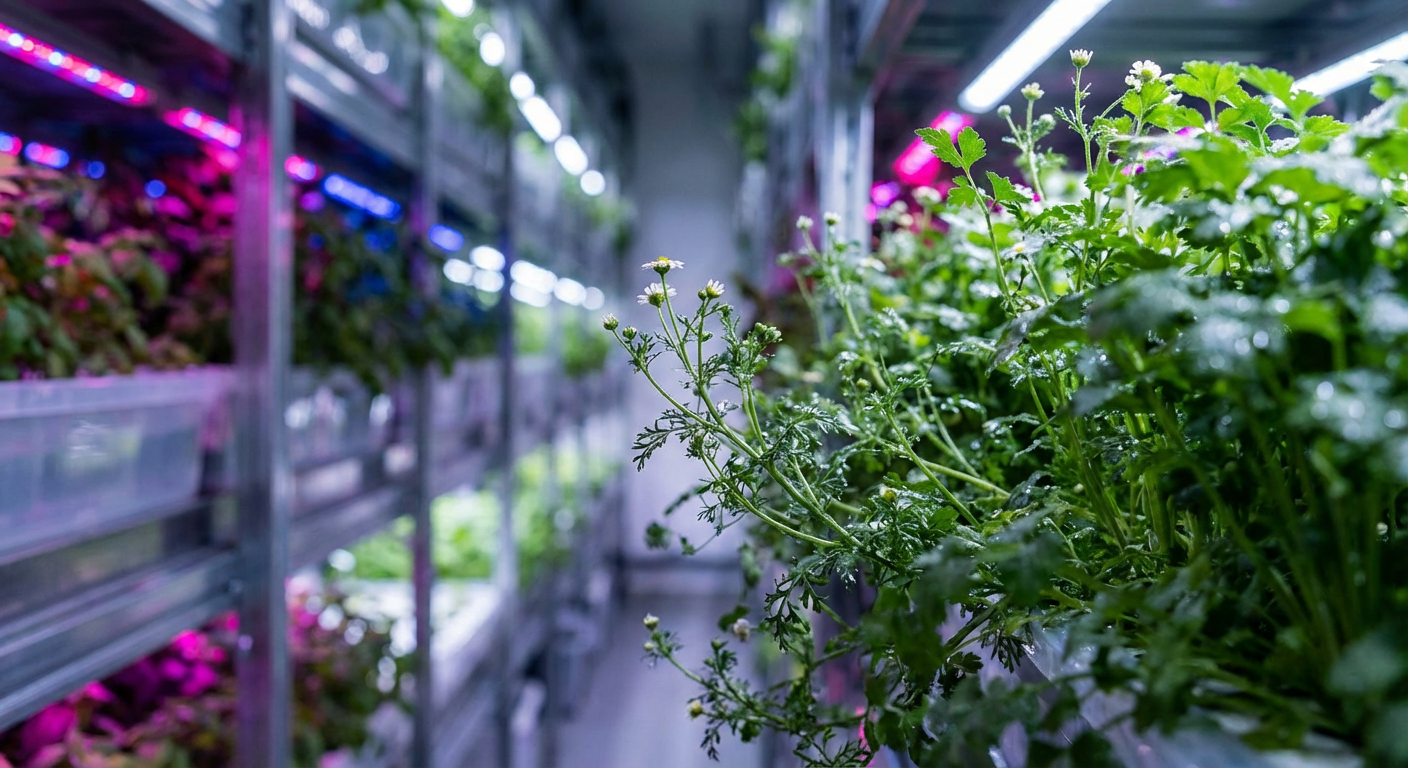
The EU Deforestation Regulation (EUDR) significantly impacts tropical supply chains, with 35–55% projected non-compliance by 2027. Vertical farm-grown Artemisia annua is 100% EUDR-compliant by design, offering a secure and sustainable sourcing solution. Our LCA (Martin, 2023) reports 0.72 kg CO₂-eq/kg, significantly lower than the vertical farm average (1.9 kg CO₂-eq/kg) and imported botanicals (1.4 kg CO₂-eq/kg).
Quality Standards for Cosmetic-Grade Extracts
For cosmetic and nutraceutical buyers, quality standards should prioritize consistent phytochemical profiles rather than antimalarial-specific artemisinin content. Our extracts are produced with pharma-grade microbial cleanliness and full European traceability. Independent analysis by CTAEX lab (2025) confirms specific marker compound levels.
"The combination of vertical farming and metabolic elicitation offers a unique opportunity to decouple quality from environmental variability. This enables the production of high-value plant extracts with defined bioactivity, while simultaneously meeting increasing demands for traceability and sustainable sourcing."
Shirin Moradi, Senior plant scientist, Supernormal greens
Frequently Asked Questions
How effective is Artemisia annua extract compared to standard acne treatments?
In vitro data suggests Artemisia annua extract offers a multi-targeted approach by selectively inhibiting C. acnes growth, reducing inflammation, and inhibiting sebum production. While direct comparative clinical trials against standard pharmaceutical treatments are limited, its complementary mechanisms position it as a potent natural ingredient.
Are there risks for using artemisinin-containing extracts topically, especially in pregnant consumers?
Yes, animal studies have indicated embryotoxicity at high doses of artemisinin-containing Artemisia annua extracts, leading to regulatory bodies like the Australian TGA issuing pregnancy warnings. Formulators should consider artemisinin-free extracts or strong cautionary labeling for products intended for topical use, especially in pregnant consumers.
Can Artemisia annua formulations reduce sebum production?
In vitro studies have shown that Artemisia annua extract can inhibit palmitic acid-induced sebum production. This suggests that formulations containing A. annua may help regulate sebaceous gland activity, contributing to clearer skin by reducing excessive oiliness.
Is there evidence that Artemisia annua disrupts C. acnes biofilm?
Direct evidence for Artemisia annua's effect on C. acnes biofilm disruption is still emerging. However, analogous research with other natural extracts, such as propolis, demonstrates the potential for natural compounds to disrupt biofilms and downregulate bacterial virulence genes. This suggests a plausible mechanism worth further investigation for A. annua.
What formulation strategies enhance skin tolerability of Artemisia annua extracts?
To enhance skin tolerability, formulators can opt for artemisinin-free Artemisia annua extracts, which have shown efficacy without the associated safety concerns. Employing appropriate delivery systems, such as encapsulation, or formulating within a soothing base can also minimize potential irritation.
How do regulatory agencies view artemisinin in cosmetic vs. pharmaceutical products?
Regulatory perspectives differ significantly. Agencies like the WHO set quality standards for artemisinin primarily for its pharmaceutical antimalarial applications. For cosmetic products, the focus shifts to general safety for topical use, with specific warnings introduced where evidence, such as embryotoxicity from animal studies, warrants it.
Are artemisinin-free extracts of A. annua as effective for acne?
Yes, an 'artemisinin-free' Artemisia annua oil extract has demonstrated antimicrobial activity against C. acnes and S. aureus. This indicates that other active compounds within the plant contribute to its efficacy, making artemisinin-free extracts a viable option for acne formulations.
What quality standards should B2B buyers expect for cosmetic-grade Artemisia annua extracts?
B2B buyers should expect cosmetic-grade Artemisia annua extracts to meet stringent quality standards focused on consistent phytochemical profiles (e.g., specific flavonoid or terpene content), microbial cleanliness, and absence of heavy metals/pesticides. Pharma-grade cleanroom cultivation and full European traceability, as offered by Supernormal Greens, provide superior quality assurance.
Can Artemisia annua be combined with other natural antibiofilm agents effectively?
While direct studies are limited, combining Artemisia annua with other natural antibiofilm agents is a logical formulation strategy. A synergistic approach could enhance overall efficacy against C. acnes biofilms by targeting multiple pathways, such as biofilm formation, virulence factor production, and bacterial survival within the biofilm.
What evidence supports using A. annua in nutraceutical vs. topical applications for acne?
The in vitro evidence for A. annua's antimicrobial, anti-inflammatory, and anti-sebum effects primarily supports its topical application for acne. While nutraceutical benefits for systemic inflammation or gut microbiome balance may indirectly impact skin health, direct evidence specific to oral A. annua for acne requires dedicated clinical research. The multi-targeted efficacy of Artemisia annua against Cutibacterium acnes, coupled with strong sustainability credentials, positions it as a compelling ingredient for cosmetic and nutraceutical formulators. For forward-thinking brands, leveraging artemisinin-free extracts and robust traceability offers a strategic advantage amidst evolving regulatory and market demands. Contact Supernormal Greens to request samples and specifications.