

Targeting Wrinkles and Fine Lines: The Clinical Evidence for Artemisia Annua
Quick answer
The demand for natural anti-aging ingredients continues to outpace supply, with a significant market shift towards botanicals supported by clinical data. As formulators seek evidence-backed alternatives to conventional actives, the role of ingredients like Artemisia annua for wrinkles and skin barrier improvement warrants closer examination. This article reviews the current scientific literature on Artemisia annua in mitigating signs of skin aging.
Key Takeaways
Artemisia annua enhances skin barrier function and hydration.
Human clinical data supports TEWL reduction and redness mitigation.
Antioxidant and anti-inflammatory mechanisms contribute to anti-aging effects.
Regulatory warnings exist for internal usage and pregnancy.
Clinical Evidence for Barrier Repair and TEWL Reduction
Artemisia annua (Sweet Wormwood) extracts demonstrate efficacy in improving skin barrier function and overall hydration, crucial factors in mitigating fine lines. A combination gel featuring Artemisia annua and Centella asiatica reduced transepidermal water loss (TEWL) by 17.95% and significantly decreased skin redness in a human clinical trial, indicating barrier reinforcement.
Skin Barrier Enhancement Mechanisms
Topical application of Artemisia annua supports the restoration and integrity of key epidermal structures.
Filaggrin Restoration: A 1% Artemisia annua extract restored filaggrin levels in a 3D epidermal model.
Loricrin and Desmoglein-1 Upregulation: The same in vitro study also observed increased levels of loricrin and desmoglein-1, critical for skin tight junction function.
TEWL Improvement: Cosmetics containing Artemisia annua improved TEWL and cuticle hydration in a clinical study focusing on sensitive skin, supporting its role in moisture retention.
These mechanisms contribute to stronger barrier integrity, reducing susceptibility to external aggressors and minimizing moisture loss which can exacerbate the appearance of fine lines.
Anti-Inflammatory and Antioxidant Mechanisms
Beyond barrier repair, Artemisia annua exhibits significant anti-inflammatory and antioxidant properties, directly addressing key contributors to skin aging. Chronic low-grade inflammation and oxidative stress degrade collagen and elastin, leading to visible fine lines and wrinkles.
Inflammatory Pathway Modulation
Artemisia annua mitigates inflammatory responses through specific cellular pathways.
Cytokine Reduction: In a 3D epidermal atopic dermatitis model, 1% Artemisia annua extract reduced pro-inflammatory cytokines such as IL-1α, IL-6, and IL-8.
MAPK/NF-κB Inhibition: Topical Artemisia annua essential oil ameliorated dermatitis in a murine model by restoring skin barrier proteins and reducing activity in the MAPK/NF-κB inflammatory signaling pathways.
Antioxidant Activity
The phytochemical profile of Artemisia annua includes compounds with notable antioxidant capabilities.
Flavonoid Content: Artemisia annua leaf extract contains antioxidant flavonoids that scavenge free radicals, protecting skin cells from oxidative damage.
Artemisinin Presence: Artemisinin, a key compound in Artemisia annua, also contributes to the extract's overall calming and conditioning effects due to its antioxidant properties.
This dual action positions Artemisia annua as a holistic ingredient for preventing and reducing the visible signs of aging.
Evidence for Fine Line and Wrinkle Benefits
While direct human clinical trials specifically on Artemisia annua for wrinkle reduction are emerging, related research and mechanistic data provide compelling evidence for its role in anti-aging formulations. Improved hydration and barrier function inherently soften the appearance of fine lines.
Comparative and Preliminary Findings
Research on related Artemisia species and preliminary studies on Artemisia annua itself offer insights into its potential for wrinkle prevention. Artemisinin collagen synthesis is an area of ongoing research, potentially linking Artemisia annua to restorative skin properties.
Study Title/Context | Key Finding | Evidence Level |
|---|---|---|
Artemisia iwayomogi cream (1%) on periocular wrinkles (21 women, 8 weeks) [Journal of Analytical Science and Technology, 2019] | Reduced wrinkles around eyes | Small human clinical trial |
Artemisia annua herb on rabbit skin (14 days) [Journal of Chemical and Pharmaceutical Sciences, 2023] | No inflammation, claimed wrinkle-preventive effects | Animal model (preliminary) |
Human clinical use of Artemisia annua cosmetics [Journal of Cosmetics, Dermatological Sciences and Applications, 2020] | Improved TEWL and cuticle hydration | Human clinical trial (indirect anti-aging) |
The observed improvements in skin hydration and barrier function directly contribute to a smoother texture, thereby mitigating the appearance of fine lines. The antioxidant capacity further protects against the cellular damage that underpins wrinkle formation. For formulators evaluating retinoid alternatives for sensitive skin, Artemisia annua presents a compelling botanical option.
Safety and Regulatory Considerations
While Artemisia annua is increasingly recognized for topical dermatological benefits, understanding its safety profile and regulatory status is essential for commercial application. Topical use is generally well-tolerated, but regulatory bodies have issued warnings concerning internal use, particularly for specific populations.
Regulatory Warnings and Contraindications
Regulatory bodies have highlighted specific concerns related to Artemisia annua extracts, primarily when consumed internally.
Australian TGA Warning: The Australian Therapeutic Goods Administration (TGA) mandates pregnant women warnings on products containing Artemisia annua, advising against use during pregnancy.
Medsafe (New Zealand) Alert: Medsafe in New Zealand reported cases of liver toxicity linked to Artemisia annua extract supplements, signifying a hepatotoxic risk with systemic exposure.
Hepatotoxicity Risk: Concentrated sweet wormwood extracts have been associated with instances of hepatotoxicity, jaundice, and acute liver failure, based on industry safety data.
These warnings underscore the importance of distinguishing between topical and systemic applications of Artemisia annua. While topical applications are generally considered safe, high concentrations in oral supplements carry notable risks.
Potential Topical Side Effects
Topical application of Artemisia annua is usually safe, but vigilance for individual sensitivities is advised.
Irritation or Allergic Reactions: Like any botanical extract, Artemisia annua may cause irritation or allergic reactions in sensitive individuals, particularly those with known allergies to the Asteraceae family.
Patch Testing: Routine patch testing is recommended for new formulations, especially for products targeting sensitive skin types.
Formulation and Dosage Guidelines for Topical Use
Effective integration of Artemisia annua into cosmetic formulations requires consideration of optimal concentrations and compatible delivery systems. Human clinical trials commonly feature concentrations around 1% of the extract in topical applications.
Optimal Concentrations and Forms
Studies indicate that relatively low concentrations of Artemisia annua extract can yield measurable skin benefits.
Clinical Trial Concentration: Human trials demonstrating skin barrier improvement have utilized concentrations of Artemisia annua extract around 1%.
Formulation Versatility: Artemisia annua can be effectively incorporated into various cosmetic forms, including creams, gels, and serums.
Synergistic Combinations
Combining Artemisia annua with other actives can amplify its efficacy and provide a broader spectrum of benefits.
Centella asiatica: A combination gel with Centella asiatica successfully reduced TEWL and skin redness, suggesting synergistic barrier-repair and soothing benefits.
Antioxidants: Pairing with vitamin E or ferulic acid may enhance its already robust antioxidant capacity.
Humectants: Integration with hyaluronic acid or glycerin can further boost skin hydration, complementing Artemisia annua's barrier-improving effects.
Plant Metabolite Variability and Harvest Timing
The efficacy of Artemisia annua extracts is fundamentally linked to its phytochemical composition, which can fluctuate based on environmental factors, cultivation practices, and harvest timing. Secondary metabolite synthesis, including artemisinin, is influenced by the plant's life cycle.
Impact of Plant Age on Secondary Metabolites
The developmental stage of Artemisia annua directly correlates with the concentration of key bioactives.
Age-Dependent Synthesis: A Scientific Reports transcriptome study from 2021 indicated that aging affects secondary metabolite synthesis, such as artemisinin, in Artemisia annua plants.
Optimal Harvest Windows: Harvesting during peak synthesis periods ensures maximal concentrations of desired compounds like artemisinin and flavonoids.
Cultivation and Extraction for Consistency
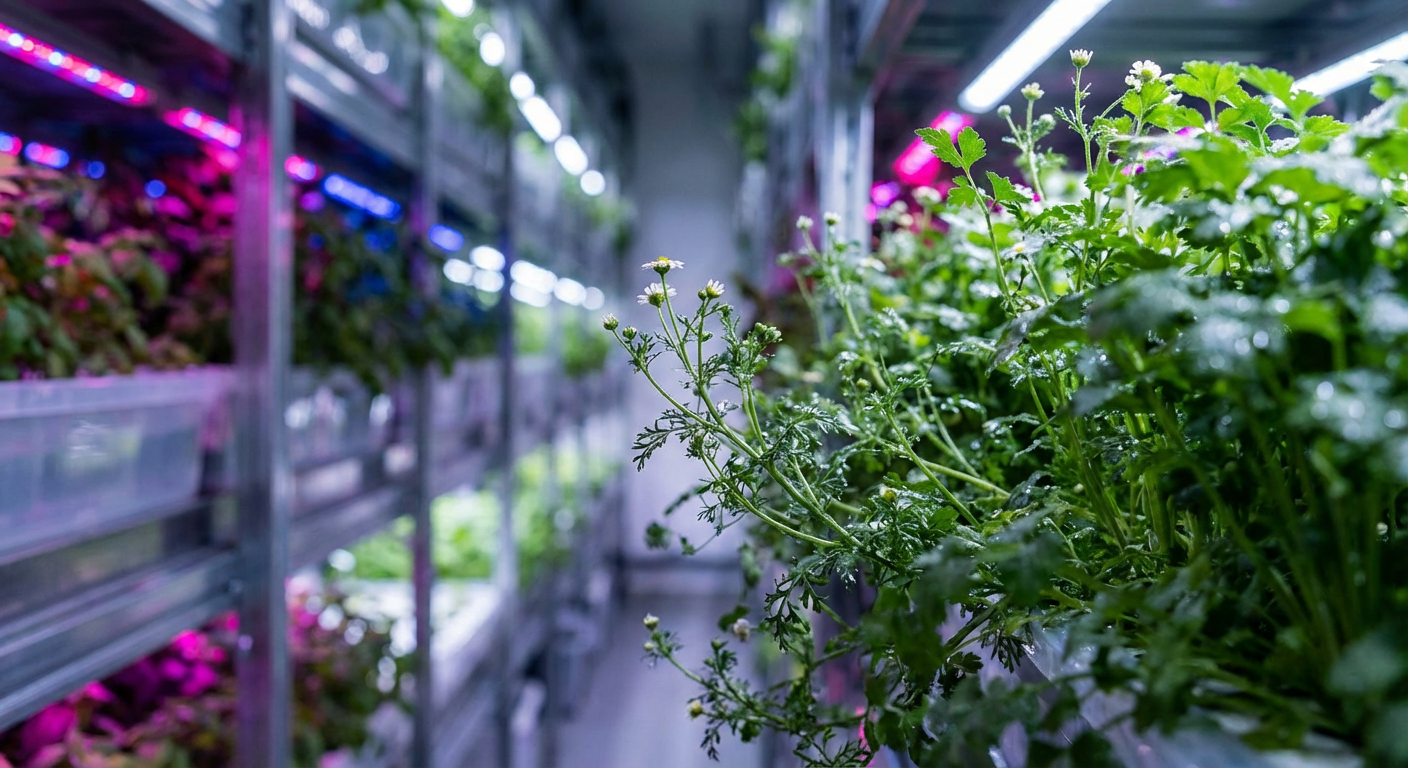
Controlled environment agriculture, such as vertical farming, offers significant advantages in managing these variables.
Abiotic Stress Protocols: Proprietary abiotic/biotic stress protocols (e.g., UV-B radiation, MeJA, salinity) can upregulate secondary metabolite production. This leads to 3-30x higher potency compared to field-grown plants.
Batch-to-Batch Consistency: Controlled environments minimize environmental variability, ensuring consistent phytochemical profiles and efficacy across batches. Our internal R&D data shows artemisinin content of 6270 mg/kg, approximately 9x higher than typical field-grown yields (independent analysis, CTAEX lab, 2025).
Pharma-Grade Cleanliness: Vertical farming eliminates pesticide use and maintains pharmaceutical-grade microbial cleanliness, crucial for cosmetic and nutraceutical applications.
Market Positioning for B2B Cosmetic Buyers
The increasing consumer demand for natural, effective, and sustainably sourced ingredients positions Artemisia annua as a significant ingredient for the anti-aging sector. Its demonstrable benefits in barrier repair, inflammation reduction, and antioxidant activity, supported by clinical data, meet critical market needs.
Meeting Modern Formulation Demands
Targeting primary keywords like artemisia annua uv protection appeals to the growing segment interested in multi-functional ingredients.
Evidence-Backed Naturals: B2B buyers prioritize ingredients with clinical data. Artemisia annua offers this, particularly concerning TEWL and skin barrier enhancement.
Multi-functional Benefits: Its ability to soothe, protect, and repair positions it well for skin-aging concerns, sensitive skin formulations, and daily protectants.
Sustainability Credentials: Sourcing from vertically farmed operations addresses growing regulatory and consumer pressure for sustainable supply chains. Our LCA (Martin, 2023) indicates 0.72 kg CO₂-eq/kg, significantly lower than the vertical farm average of 1.9 kg and imported botanicals at 1.4 kg.
Addressing Supply Chain Resilience
Global supply chain disruptions make locally and sustainably sourced ingredients highly attractive.
EUDR Compliance: Vertically farmed Artemisia annua is 100% EUDR-compliant by design, mitigating compliance risks for European cosmetic brands.
Consistent Supply: Controlled cultivation reduces reliance on fluctuating field harvests, offering consistent quality and availability.
The demand for effective botanical extracts for fine lines and natural anti-aging ingredients is expanding. Artemisia mmp-1 inhibition is another area where research suggests further benefits.
Frequently Asked Questions
What concentration of Artemisia annua is effective for skin barrier improvement?
Human clinical trials commonly demonstrate efficacy for skin barrier improvement using topical formulations containing approximately 1% Artemisia annua extract. This concentration has been shown to reduce TEWL and increase skin hydration.
Are there human clinical trials demonstrating anti‑aging effects of Artemisia annua?
While direct human clinical trials specifically on Artemisia annua for wrinkle reduction are still emerging, studies confirm its role in improving TEWL and cuticle hydration, which indirectly mitigate fine lines. A related species, Artemisia iwayomogi, showed significant wrinkle reduction in an 8-week human trial.
What is the mechanism by which Artemisia annua reduces fine lines?
Artemisia annua reduces fine lines primarily by enhancing skin barrier function, improving hydration, and providing antioxidant and anti-inflammatory protection. It restores key barrier proteins like filaggrin and loricrin, supports moisture retention, and mitigates oxidative stress and inflammation that degrade collagen.
Is topical use of Artemisia annua safe for all skin types?
Topical Artemisia annua extract is generally considered safe and well-tolerated across various skin types. However, individuals with sensitive skin or known allergies to the Asteraceae family should exercise caution, and patch testing is recommended to rule out potential irritation or allergic reactions.
Are there any regulatory restrictions or warnings for cosmetic use of Artemisia annua?
Regulators like the TGA (Australia) require specific pregnancy warnings for products containing Artemisia annua, advising against use by pregnant or likely pregnant individuals. New Zealand's Medsafe has also reported liver toxicity issues associated with internal consumption of highly concentrated extracts, highlighting a distinction between topical application and systemic intake.
How does Artemisia annua compare to Centella asiatica for anti‑aging?
Both Artemisia annua and Centella asiatica are valued for their skin-soothing, barrier-repairing, and anti-inflammatory properties. A clinical study showed a combination of both extracts effectively reduced TEWL and redness, suggesting complementary actions in anti-aging and skin barrier support formulations.
Can harvesting time affect Artemisia annua extract efficacy?
Yes, harvesting time significantly impacts the phytochemical profile and efficacy of Artemisia annua extract. The synthesis of key secondary metabolites, such as artemisinin and various flavonoids, is dependent on the plant's age and developmental stage, influencing the overall potency of the final extract.
What formulation forms (creams, gels, serums) work best for Artemisia annua?
Artemisia annua extract is versatile and has shown efficacy in various topical cosmetic formulation forms, including creams, gels, and serums. The best form depends on the desired user experience, target skin area, and combination with other active ingredients.
Are there known interactions or contraindications with other actives?
For topical use, interactions with other cosmetic actives are not widely reported. However, due to its anti-inflammatory effects, it may synergize with other soothing ingredients. Given regulatory warnings for internal use, careful consideration should be given to formulations intended for systemic absorption, and potential interactions with drugs metabolized by cytochrome P450 enzymes should be considered by prescribers if recommending oral supplements.
Is there market demand for sweet wormwood‑based anti‑aging ingredients?
Yes, there is a growing market demand for sweet wormwood-based anti-aging ingredients, driven by increased consumer preference for natural, evidence-backed botanicals in skincare. Its proven benefits in skin barrier repair, hydration, and antioxidant protection align with current trends in the cosmetic and nutraceutical industries. The evidence for Artemisia annua in addressing fine lines and supporting overall skin health is robust, particularly regarding barrier function and inflammatory modulation. As demand for high-potency, data-backed natural ingredients grows, Artemisia annua sourced from controlled environments represents a valuable addition to advanced cosmetic formulations. Contact Supernormal Greens to request samples and specifications.